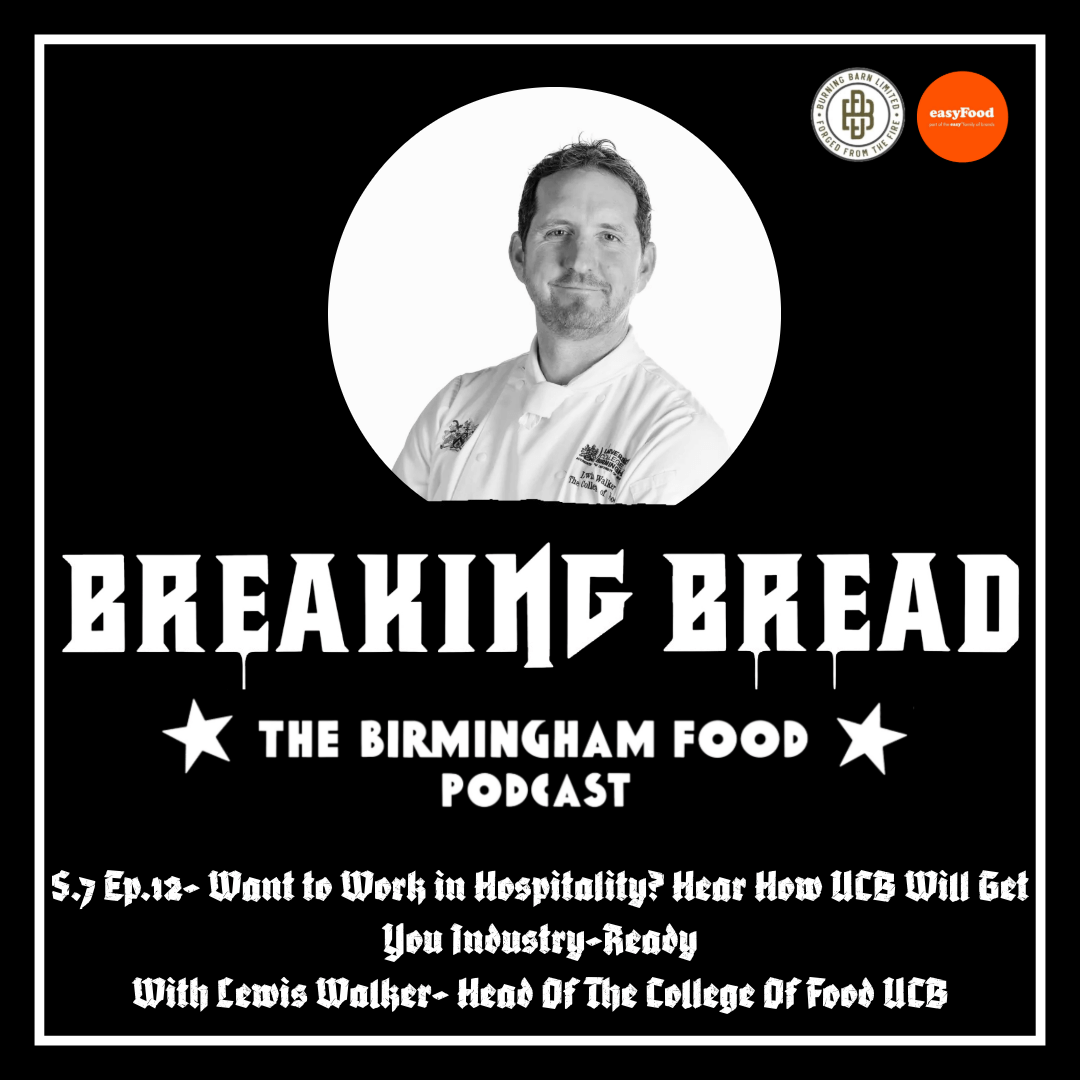
Join Chef Lewis Walker at UCB restaurant as we delve into the unique training environment for aspiring chefs at University College Birmingham. Our guest, Chef Lewis Walker is a seasoned chef and head of the culinary arts department
If you’ve ever walked into a room and felt its energy hum with purpose, you know the kind of buzz that exists at University College Birmingham’s culinary school. It’s not just a place where students learn to cook, it’s a crucible where raw talent meets fire, pressure, and inspiration. Chef Lewis Walker is at the helm of this dynamic environment—a man as passionate about nurturing young chefs as he is about the food they create.
In our recent podcast, Lewis opened the doors to his world at UCB, where classrooms smell of caramelizing onions and the steady rhythm of knife-on-chopping-board echo ambition. UCB isn’t just a culinary school; it’s a full-fledged restaurant, open to the public, where diners expect excellence. The stakes are high, but so are the rewards.
What Is UCB?
The concept is as bold as it is brilliant: let students train in a real kitchen environment where paying customers sit just beyond the pass. It’s vocational education stripped of pretension and dressed in the grit of real-life hospitality.
Lewis doesn’t sugarcoat the experience for his students. The kitchen demands presence, precision, and humility. Every service is a lesson, every dish a story waiting to be told.
What sets UCB apart is its commitment to balance. The staff pushes students to industry-level standards while creating a supportive space to fail, learn, and grow. There’s no shouting brigade of chefs here; instead, there’s mentorship. It’s about giving young cooks room to stumble and recover, to discover who they are with a knife in their hand and a station to call their own.
Chef Lewis Walker On Why You Should Go To UCB
Here’s the thing about UCB: it doesn’t just teach you how to cook; it teaches you how to think like a chef. This isn’t a school that churns out graduates armed only with fancy plating techniques and zero understanding of how to run a kitchen. It’s a breeding ground for future industry leaders.
UCB’s public-facing restaurant isn’t just a gimmick; it’s a pressure test. Students learn what it means to deliver quality under scrutiny, how to handle criticism from diners who don’t care if you’re still mastering béarnaise. It’s not just cooking—it’s performing, adapting, thriving.
And the facilities? They’re world-class. Training kitchens equipped with everything a budding chef could need. A faculty of experienced professionals like Lewis, who are as much a part of the city’s food culture as they are educators. And it’s all in Birmingham, a city that’s fast becoming one of the most exciting culinary destinations in the UK.
If you’re dreaming of becoming a chef, Lewis’s advice is simple but profound: show up and absorb it all.
“Be present,” he says. “Engage in your classes, listen to your lecturers, and take every opportunity to learn.”
There’s a romantic image of the chef as a lone genius, but the truth is less glamorous and more rewarding. It’s about teamwork, resilience, and a relentless pursuit of betterment. Lewis is living proof that success in the kitchen isn’t about who shouts the loudest or plates the prettiest—it’s about who listens, learns, and lasts.
The Importance Of UCB In Brum
Lewis isn’t just shaping chefs; he’s part of a city-wide movement that’s redefining what Birmingham tastes like. From Michelin stars to street food gems, this city has become a culinary mosaic, and UCB is helping to paint that picture.
“Birmingham has a great food scene,” Lewis says with a grin, and it’s not hard to see why. The city pulses with creativity, its chefs pushing boundaries while staying rooted in hospitality’s timeless traditions. And many of those chefs have walked through the doors of UCB.
If you’re serious about food, about finding your voice in the kitchen, UCB is where you want to be. It’s not an easy ride—Lewis will be the first to tell you that. But nothing worth doing ever is.
At UCB, you’re not just learning to cook; you’re learning to belong to an industry that will challenge you, humble you, and, if you let it, make you. And maybe, just maybe, you’ll end up like Lewis Walker: equal parts mentor and artist, with Birmingham’s food scene as your canvas.
So, to all the future chefs reading this: get your hands dirty, keep your eyes open, and don’t stop moving forward. The kitchen is waiting.
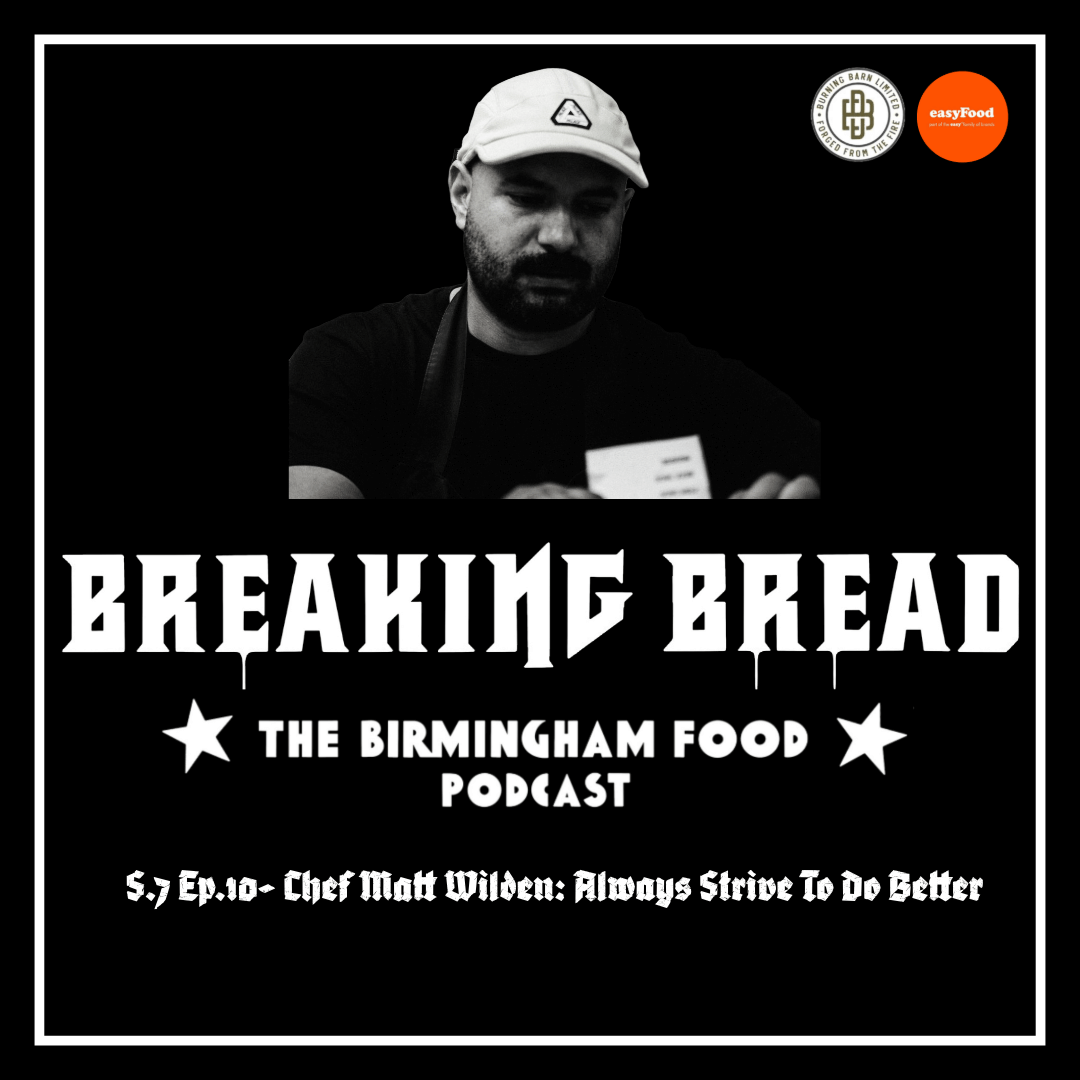
In this episode, we sit down with renowned Birmingham chef Matt Wilden, who discovered his passion for cooking later in life and transformed it into a successful career. If you’re an aspiring chef or thinking it’s too late to follow your dream, this conversation will change your perspective.
From Late Bloomer to Pizza Pioneer: Chef Matt Wilden’s Culinary Journey
Some people find their calling early, others spend a lifetime chasing it. For Chef Matt Wilden, it came with the urgency of a second chance—at 26. In an industry obsessed with prodigies barely out of culinary school, starting later in life isn’t just uncommon; it’s audacious. But audacity seems to suit Matt just fine.
He didn’t grow up in a kitchen or dream of Michelin stars as a teenager. Instead, Matt’s culinary journey began with a leap of faith—walking through the doors of University College Birmingham (UCB) with a determination that could crush boulders. No family lineage in fine dining, no childhood anecdotes of perfecting béchamel with grandma. Just raw hunger for something different, something better.
Starting at 26, you don’t have time to waste. You’re playing catch-up in a world that’s already sprinting. And sprint he did, carving out time in demanding kitchens like Hotel Du Vin, absorbing everything he could.
Matt’s Love Of Pizza
Real growth doesn’t come from comfort. It’s in the fire, literal and figurative, where you find what you’re made of. Matt spent years shaping his craft, including a time at Baked in Brick, where he first started cooking with fire. The smell of charred dough and blistered toppings was intoxicating.
That passion for cooking quality pizza and cooking on fire led him to start Poli with Grace and James’s owners. Poli wasn’t just about serving food; it was about creating an experience. Matt wasn’t just making pizza; he was making art. Of course, it wasn’t all smooth sailing. Early mornings wrestling dough that refused to behave. Sleepless nights worrying if anyone would show up. That gnawing voice in the back of your head whispering, “What if this all goes up in flames?”
But it didn’t. Instead, the flames became fuel. Poli found its stride. People came for the food but stayed for the story—a chef who started late and still came out swinging.
Matt Wilden Pinata
Matt’s story doesn’t stop with pizza. His love for flavours pushed him into Mexican cuisine. Matt’s obsession with excellence, making something the best it can be resulted in Pinata. A series of pop-ups celebrating the vibrant, smoky, spicy symphony of tacos and mole. It’s not just about feeding people; it’s about the thrill of trying something new.
Matt Wilden’s Advice For Anybody Who Thinks It’s Too Late To Start Cooking
1. Don’t Let Age Be Your Excuse. “Your twenties, thirties, forties—it doesn’t matter. If you love it, just start. The industry doesn’t care how old you are; it cares about how much you’re willing to give.”
2. Embrace the Struggle. “It’s not glamorous. It’s 14-hour days, sweat-soaked shirts, and aching feet. But if you’re in it for the right reasons, you won’t care. The grind is part of the joy.”
3. Be a Sponge. “Learn from everyone. The dishwasher, the sous chef, the old guy who’s been making dough for 20 years. Absorb it all. And never, ever think you know everything.”
4. Find Your Niche. “Cooking isn’t just about following recipes. It’s about finding what speaks to you—whether it’s wood-fired pizza or ceviche. When you love what you do, people can taste it.”
5. Push the Boundaries. “Don’t stop learning. If you’re not evolving, you’re dying. There’s always something new to try, some flavor to explore. Keep going.”
Matt Wilden is proof that it’s never too late to start something extraordinary. His journey is a reminder that passion and grit can take you further than talent alone ever will. So, if you’re sitting on the sidelines wondering if it’s too late, here’s your answer: It’s not. The fire’s waiting. All you have to do is step into it.
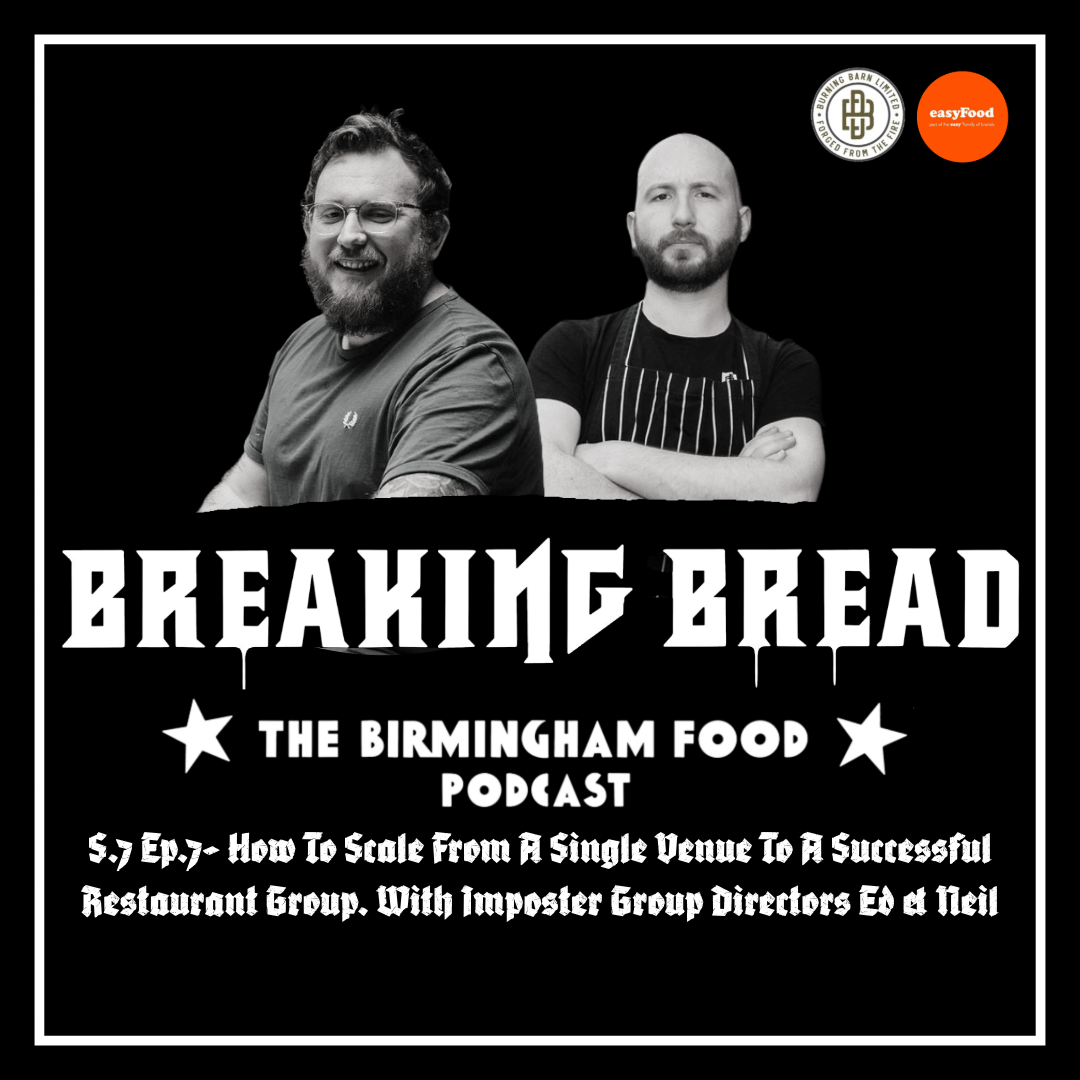
Welcome To Breaking Bread Imposter Group Owners Ed & Neil
We break bread with Imposter Group directors Neil and Ed this week as they share their journeys to Birmingham, delving into the city’s thriving hospitality scene. Neil and take you behind the scenes of their awesome venues, places like Tiger Bites Pig, Trentina and The Church.
Who Are Imposter Group Directors Neil & Ed?
There’s a reason we eat; more than hunger, more than taste. It’s connection, camaraderie, survival. Some people get that, and some people are Neil and Ed. Two lads from Scotland and Grimsby—places known for their grit—who managed to bring a slice of themselves, a fierce loyalty to quality, and a bit of rebellion to Birmingham’s food scene.
Neil and Ed’s story isn’t just a tale of opening restaurants; it’s a test of resilience, skill, and a little madness. From early days in hospitality’s back alleys, enduring endless shifts and long nights, they’ve crafted their own narrative by refusing to play it safe. They’re not the types to settle, nor are they the types to shy away from taking risks, pushing boundaries, or wrestling with the pandemic. They’ve built the Imposter Group brand on two things: good food and a genuine, rough-around-the-edges hospitality you can’t fake.
Imposter Group Venues
Tiger Bites Pig, a joint that flips the script with bao buns that became iconic for locals. This was their first experiment in crafting a space that felt equal parts bar, and sanctuary. They leaned into their gut instincts and served what they loved. The Imposter Group team didn’t care about what the market dictated. It was about getting people through the door, around the table, and sharing something memorable. The same is true of their other adventures. Trentina, Txikiteo, Tierra and the legendary Church, are all a step up, sure, but rooted in the same no-nonsense approach to quality and community.
Imposter Group Struggles
When COVID hit. Like all restaurants, they were pummeled, but they didn’t break. They pivoted, reimagined, and fought tooth and nail for the survival of their places. They threw themselves into keeping the doors open and staff paid, balancing passion with the grim realities of the times. It was more than business; it was about preserving the city’s beating heart of independent food culture. Today, Neil and Ed’s venues don’t just feed you; they remind you why cities need places like these, where the food has a story, the owners have scars, and every meal is an invitation to be a part of it.
Watch Our Full Conversation
00:00 Welcome to Breaking Bread
00:10 From Scotland to Birmingham
00:38 First Impressions of Birmingham
01:06 Life in Edinburgh
04:32 Birmingham’s Transformation
08:18 The Rise of Cocktail Culture
14:13 The Burger Boom
15:09 Career Journey in Hospitality
17:54 Starting Tiger Bites Pig
30:03 Navigating COVID Challenges
45:50 Learning the Ropes of Interior Design
47:18 Challenges of Opening Tierra
48:11 Unexpected Hurdles and Quick Fixes
51:23 Navigating Equipment and Supply Issues
53:52 The Importance of Community and Collaboration
57:38 Reviving and Maintaining Venue Standards
01:03:21 The Unique Offerings of Txikiteo
01:07:31 The Art of Crafting Quality Food and Drink
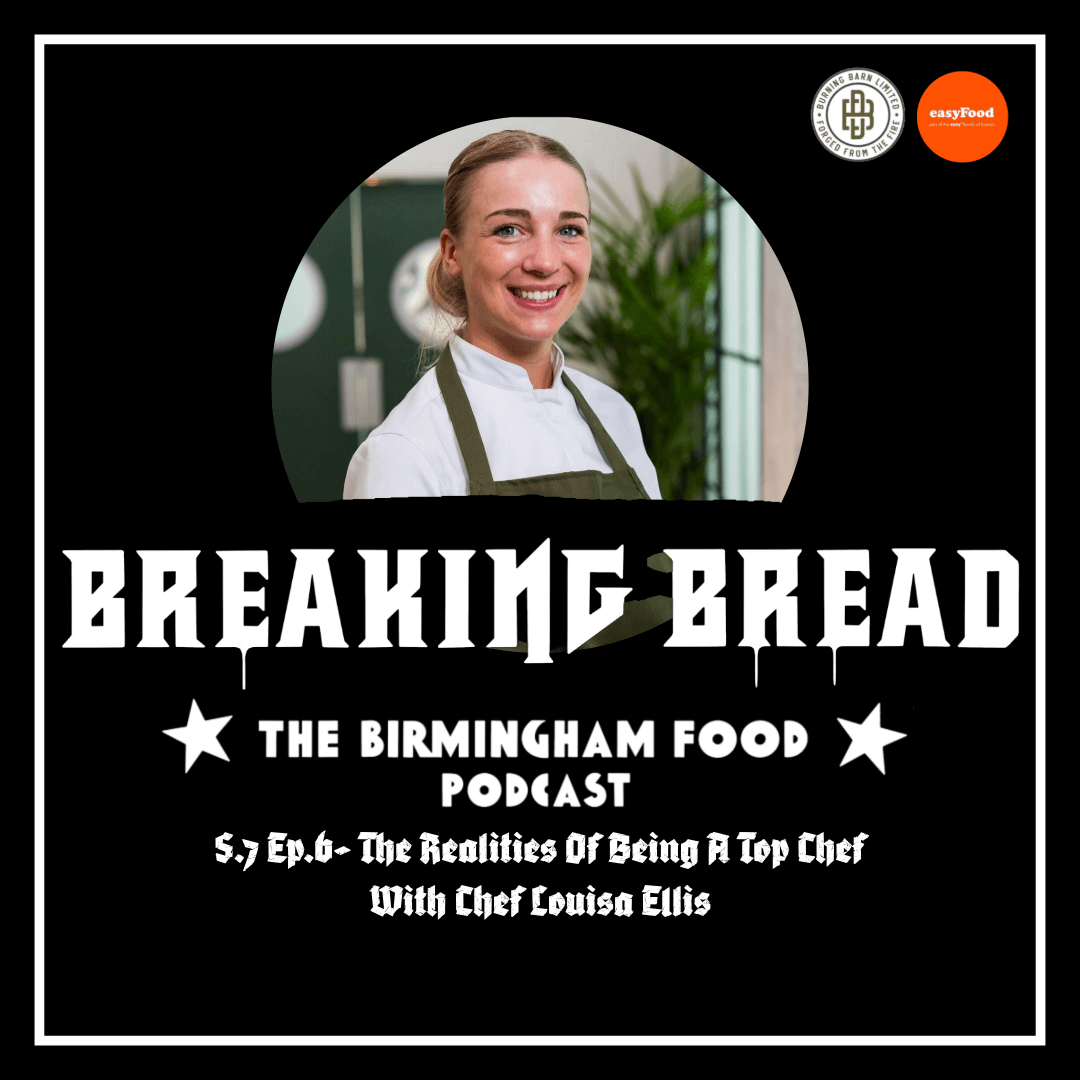
This week, we break bread with the massively talented Chef Louisa Ellis. Louisa owns her own business as a private dining chef based in Nottingham. She trained in high-end restaurants all over the Midlands before taking part in Masterchef The Professionals and Great British Menu.
Chef Louisa Ellis’s Early Life
Some people are born to cook, and some discover it later, but for Louisa Ellis, cooking was a part of life before she even realised it was her calling. Growing up in Luton, Louisa’s early lessons in the kitchen were at home, stirring pots and experimenting with flavours that would eventually lead her to the blistering heat of professional kitchens. In our latest podcast episode, Louisa shares a story that’s as raw as the ingredients she began with—a tale of grit, resilience, and an insatiable hunger to prove herself.
Chef Louisa Ellis’s Career
Louisa’s career started humbly at Catering College. While her peers grappled with recipes and culinary techniques, Louisa was soaking up every challenge thrown her way. But as her skills grew, so did the fire in her to stand out in an industry that’s tough as nails and relentless in its demands. The hotel kitchens were her first battlegrounds, places where young chefs often drown in a sea of orders, overwhelming heat, and towering personalities. Louisa didn’t just survive; she thrived, learning not only how to cook but also how to navigate the fierce, unfiltered world of restaurant kitchens.
It started with a meal at Adam’s in Birmingham—a Michelin-starred spot where plates looked like art and flavours hit you like a perfectly timed punch. For Louisa, sitting there, savouring each bite, it was more than just dinner; it was an awakening. She walked out of that meal with a question for herself: Could she work in a place like this? She didn’t just wonder—she went back, asked for a trial shift, and Adam himself gave her a shot. It was here she felt the fever of Michelin-level intensity, where every detail matters and perfection is the only acceptable outcome.
Hungry to push herself, and try a new style, she moved on to The Wilderness under Alex Claridge. It was a place known for breaking boundaries, where fine dining met rebellion. There, Louisa didn’t just learn technique—she learned to be fearless in her cooking. After a while, she found herself drawn to the legendary kitchen of Restaurant Sat Bains in Nottingham, a two-star temple to flavour and discipline. It was here that the stakes were the highest, and every service demanded both fire and precision. Louisa got a job after an intense trial shift. Sharpening her skills and her resolve, set the stage for her journey to come.
Masterchef The Professionals/Great British Menu
then came the call of MasterChef, the place where chefs are torn down and rebuilt in front of millions. Louisa knew this was her shot, but it didn’t come easy. Her time on the show was a gauntlet of nerve-wracking challenges, cooking under the unforgiving gaze of cameras and judges. Yet, as pressure mounted, her skill and determination spoke louder. She emerged from MasterChef having got to the final, not only as a better chef but with a career-altering platform that would catapult her into the culinary spotlight.
But it didn’t stop there. Louisa, hungry for more, took on the Great British Menu, where the stakes—and expectations—were even higher. This time, the preparation was painstaking, the pressure almost unbearable. Yet for Louisa, each moment was a test, a proving ground, where the personal stakes went beyond the accolades.
Chef Louisa Ellis On Mental Health & Doing Whats Best For You
Through it all, Louisa has been open about the toll the industry can take on one’s mental health. It’s a career that can break the best, and Louisa doesn’t hold back about her own struggles. The kitchen demands not only your talent but your sanity, too, and Louisa’s path was lined with moments of self-doubt and burnout. Her bold pivot to become a private chef wasn’t an escape—it was a choice for self-preservation, a testament to the importance of mental health and finding balance.
Louisa’s story is about the pursuit of passion and the price it demands. It’s a story of resilience, self-care, and ultimately, the courage to carve out her own path in a world that rarely grants second chances.
Welcome To Breaking Bread Rabbit Owners Ash & Erin
In this episode of Breaking Bread, we welcome Ash and Erin, the duo behind Rabbit, a unique 12-seat restaurant in Stirchley, Birmingham. We believe Rabbit is one of the best restaurants in Birmingham right now and wanted to sit down with Ash & Erin to find out more about this awesome place.
Who Are Ash & Erin?
In a world where everything moves too fast, where the culinary giants rarely look back, Ash and Erin’s story feels like a slow burn—a kind of magic that comes together when the stars align just right, or in their case when an Instagram message lights the spark. Ash, a chef hailing from the rugged landscapes of South Africa, and Erin, a UK-based PhD student immersed in the complexity of ceramics, never planned to uproot their lives. But life has a funny way of demanding the unexpected.
This wasn’t just another love story. This was about daring leaps, transcontinental moves, and leaving behind the familiar in pursuit of something rare and raw. Their first encounter wasn’t even in person; it was online, a casual conversation that turned into an eight-hour deep dive, exploring everything from food and art to what they each wanted from life. They didn’t realise it then, but that conversation laid the groundwork for a future neither saw coming. Soon enough, Ash packed up her life in South Africa, leaving behind her own restaurant and all the memories that came with it, to join Erin in Birmingham at the height of the pandemic.
What Is Rabbit?
Once in Birmingham, the real work began. They didn’t dive headfirst into opening a restaurant—they tested, tasted, and slowly built a reputation. Pop-ups became their canvas, each one a preview of something greater, each one pulling people in like moths to a flame. They finally found a home in the Stirchley neighbourhood, opening a 12-seat dining experience. This isn’t just a restaurant; it is a living, breathing space where people can feel like they belong.
Their small, intimate dining room—filled every night with a limited number of diners—puts every other white-tablecloth, industrial-sized kitchen to shame. It’s a reminder that food is more than sustenance. Ash brings her culinary craft, sharpened and honed on the intense fires of South Africa’s kitchen culture, to this 12-seater haven. Erin’s influence, meanwhile, brings a sense of structure, an almost engineering-like precision. But there’s a warmth, a sense of community, a grit that you just don’t get in places built on big budgets and endless PR.
Here, in this little restaurant in Stirchley, they’ve built more than just a business. It’s a space where food, art, and life merge. Each dish, every plate that comes out, carries their story—a journey of hard-won battles, uprooted lives, and fierce determination. Ash and Erin’s restaurant isn’t just a place to eat; it’s an invitation to share in the wild, beautiful ride they’ve had. And for the people lucky enough to find themselves there, they’re getting a taste of something more real, more genuine than what most of us will find in a lifetime.
Go Watch Our Awesome Conversation With Ash & Erin, Rabbit
00:00 Introduction and Greetings
00:22 Running a Small Restaurant in Birmingham
02:56 Ash’s Culinary Journey
19:03 Erin’s Background and Career
34:38 The Decision to Stay in Birmingham
39:46 Exploring the Vibrant Food Scene
40:50 The Benefits of Pop-Ups for Aspiring Restaurateurs
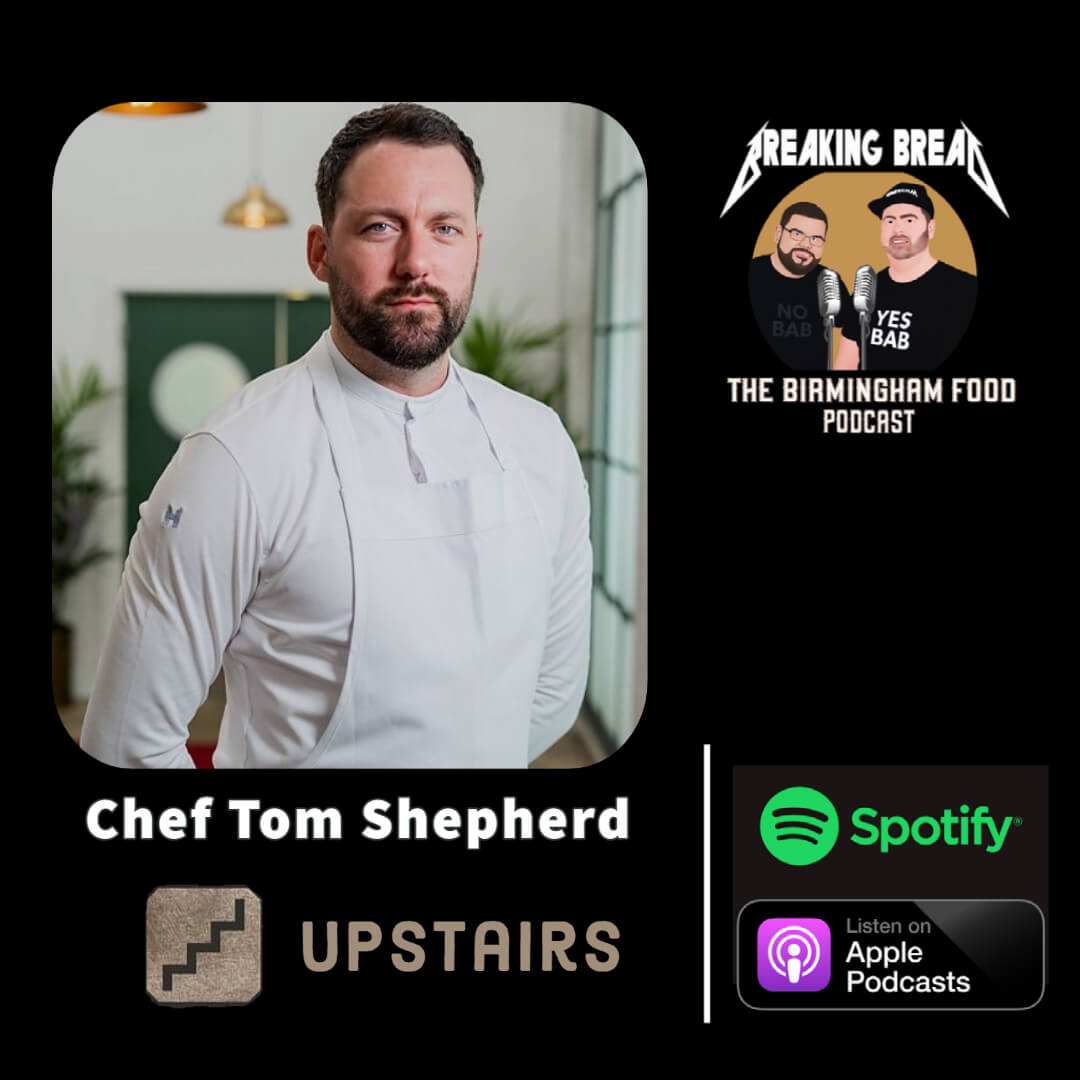
Listen to our Breaking Bread Birmingham food podcast episode with chef Tom Shepherd owner of Michelin Star Upstairs in Lichfield & star of BBC’s Great British Menu. Press play on the player above. Alternatively, listen on your favourite podcast app, just select from the list on thisLINK
Chef Tom Shepherd Welcome To Breaking Bread
Prepare your taste buds for an exhilarating journey through the world of fine cuisine! In our latest episode of our Birmingham Food Podcast, we had the pleasure of sitting down with the phenomenal Michelin-starred chef, Tom Shepherd. His story is one of passion, perseverance, and the pursuit of culinary excellence. Join us as we delve into Chef Tom Shepherd’s remarkable journey, from humble beginnings to owning his own restaurant and achieving his lifelong dream of winning a Michelin Star.
The Journey Of Tom Shepherd
Chef Tom Shepherd’s journey to culinary greatness was nothing short of extraordinary. Every step he took in his career was purposeful, leading him towards his ultimate goal of owning a Michelin-starred restaurant.
Throughout his journey, Chef Tom has had the privilege of working under talented mentors such as Michael Wignall at the Latymer, and Sat Bains. Both were a huge influence on Tom and shaped his culinary style and philosophy. It was as head chef of Birmingham Michelin Star restaurant Adams that Tom brought all his experiences together, describing it as a finishing school.
Michelin Star Triumph
The pinnacle of Chef Tom Shepherd’s journey came with the life-changing moment of winning a coveted Michelin Star. It was a dream he had nurtured since the beginning of his career, and the day it became a reality was a culmination of years of hard work, sacrifice, and unwavering determination. The emotional rollercoaster of that day, from reflecting on the challenges faced to the magical announcement shared with his team, created an indelible memory etched in Chef Tom’s heart forever.
Great British Menu
Chef Tom Shepherd’s journey also included a memorable experience on the renowned Great British Menu. This personal and challenging journey tested his culinary skills, creativity, and resilience. Tom made it all the way to the banquet with his main dish of Desperate Dan pie. This served as a platform for Chef Tom to showcase his culinary prowess and push the boundaries of his craft. Through the ups and downs of this extraordinary adventure, he emerged stronger and more determined to continue pushing the limits of what his restaurant, Upstairs in Lichfield, could achieve.
Reasons To Listen
Chef Tom Shepherd’s story is a testament to the power of passion, dedication, and unwavering belief in one’s dreams. His journey is a reminder that hard work, sacrifice, and the support of mentors can shape a culinary career beyond imagination. Through the Birmingham Food Podcast, listeners have the privilege of hearing firsthand about the triumphs, the setbacks, and the moments that have shaped Chef Tom’s culinary legacy.
So, whether you’re a food enthusiast, a budding chef, or simply someone who appreciates remarkable stories of success, this episode of the Birmingham Food Podcast is a must-listen. Embark on a gastronomic adventure that will leave you with a newfound appreciation for the art of culinary creation and the extraordinary individuals who make it possible.
Tune in now and experience the taste of greatness with Chef Tom Shepherd. You won’t want to miss this flavorful journey!
Breaking Bread is & always will be free to listen to. It is not free to make. To continue to improve & bring you these conversations & stories we need your support. Making a one-off donation of as little as £3 or a monthly subscription every pound will make a difference. Support us- https://www.buymeacoffee.com/brumfoodpod
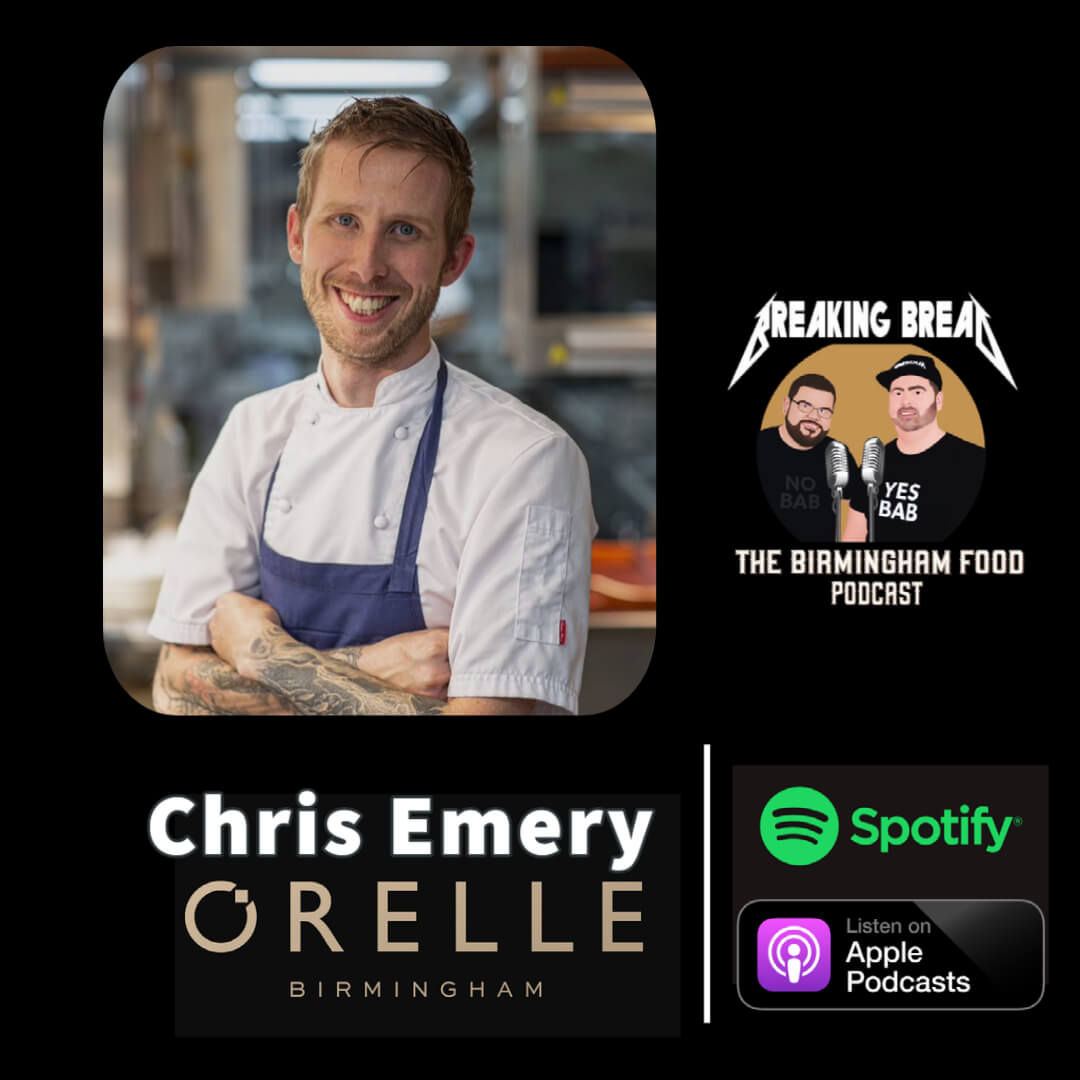
Listen to our Breaking Bread Birmingham food podcast episode with Orelle executive chef Chris Emery Press play on the player above. Alternatively, listen on your favourite podcast app, just select from the list on thisLINK
Welcome Orelle Executive Chef Chris Emery
In the realm of culinary excellence, there are a select few individuals who not only possess extraordinary talent but also live their lives in pursuit of their culinary dreams. Chef Chris Emery, the executive chef of the highly acclaimed Orelle restaurant in Birmingham, is one such individual. In this captivating episode of Breaking Bread, we had the honour of sitting down with Chef Chris Emery to uncover the remarkable story behind his rise to success and the sacrifices he made to turn his childhood passion into a lifelong career.
Chef Chris Emery- Early Aspirations and Stepping into the Fire:
For Chef Chris, the path to becoming a culinary maestro began in his early years. While most children fantasised about becoming famous or playing sports, Chris was unwavering in his desire to become a chef. As he reminisces, he shares how his dreams aligned with his love for cooking, and he knew that the kitchen was where he truly belonged.
The journey truly began when Chris dived headfirst into the culinary world. Working for prestigious establishments like Pollen Street, Sketch, and The Fat Duck, he faced the demanding and often ruthless nature of Michelin-starred kitchens. From enduring the pressure-cooker environment to enduring the intimidating presence of renowned chefs, Chris developed the resilience and skills necessary to thrive in the culinary industry.
Triumphs and Trials:
Chef Chris’s story isn’t just one of glory; it is a tale of relentless determination and unyielding passion. He recounts the gruelling experience of working for 27 consecutive days, often clocking in at 3:30 am and leaving well past midnight. This extreme commitment took a toll on his physical and mental well-being, but it was a testament to his unwavering dedication to his craft.
Amidst the challenges, Chef Chris Emery’s talent and perseverance shone through. His exceptional skills caught the attention of culinary luminary Michel Roux, who walked into the kitchen on his first day at Waterside and tasked him with cooking an omelette. This encounter marked a turning point in his career, opening doors to new opportunities and adventures.
The podcast episode also delves into the exciting prospects that come with working in the hospitality industry. Chef Chris shares an awe-inspiring moment when legendary chef Jason Atherton offered him a role at his prestigious establishment in the bustling city of New York. Without hesitation, Chris seized the opportunity, and within a span of two and a half months, he found himself on a plane, ready to embark on a new chapter of his culinary journey.
Chef Chris Emery’s story is a testament to the limitless possibilities that exist within the culinary world. He emphasises that there are no longer any boundaries or constraints in pursuing a culinary career, urging aspiring chefs to dream big and relentlessly pursue their passions.
What We Learned From Chef Chris Emery
Chef Chris Emery’s journey from a wide-eyed child with a dream to an accomplished executive chef serves as an inspiration to chefs and food enthusiasts alike. His unwavering dedication, unrelenting work ethic, and audacity to seize opportunities have propelled him to extraordinary heights in the culinary world. As listeners of Breaking Bread, we are privileged to gain insights into his trials, triumphs, and the unwavering passion that fuels his culinary endeavours.
Join us on this captivating episode as we dive deep into the life and career of Orelle executive Chef Chris Emery. Discover the extraordinary story behind the man who is truly living the dream, and let his journey ignite your own culinary aspirations. Together, let us celebrate the indomitable spirit of those who dare to chase their dreams and redefine the boundaries of culinary excellence.
Although Breaking Bread is & always will be free to listen to it is not free to make. To continue to improve & bring you these conversations & stories we need your support. Making a one-off donation of as little as £3 or a monthly subscription every pound will make a difference. Support us- https://www.buymeacoffee.com/brumfoodpod
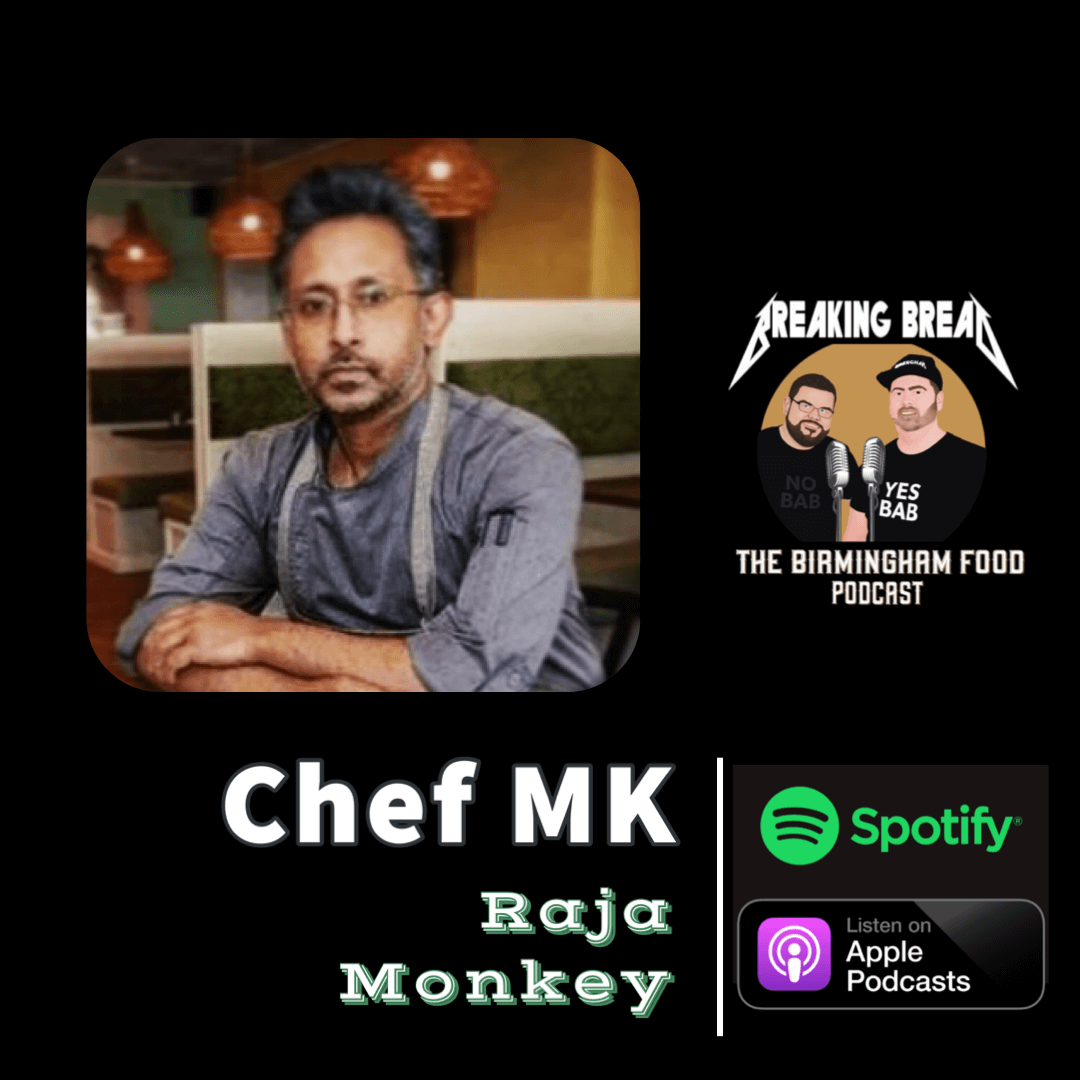
Hello & a warm welcome back to the Birmingham food podcast breaking bread. Co-hosted by food-obsessed mates Liam & Carl, Breaking Bread gives you long-form interviews & discussions with the incredible people that make Brums food scene so unique. This week we break bread with Chef MK from the brilliant Raja Monkey in Hall Green
If you’re a foodie in Birmingham, then you must have heard of Raja Monkey, a fantastic restaurant in Hall Green. The head chef and owner of this restaurant is Chef MK, who as part of Lassan group, has been a prominent figure in the culinary industry for over 20 years. In this episode of Breaking Bread Chef MK shares his journey, philosophy, and insights into the culinary industry.
One of the main takeaways from the episode is the importance of perseverance and dedication in the culinary industry. Chef MK emphasises that young chefs need to put in time and effort to develop their skills and knowledge. It’s not something that can be achieved overnight. He believes that exposing oneself to different flavours, techniques, and chefs from around the world is crucial to becoming a great chef.
Chef MK also shares his philosophy on hiring new team members. He believes in inspiring ordinary people to do extraordinary things and sees this as true leadership. He is proud of having trained individuals that other places might have considered unemployable.
The hosts of Breaking Bread also discuss Chef MK’s story of starting the Lasan Group, which was a groundbreaking Indian restaurant in Birmingham. They talk about the challenges they faced as a restaurant that offered more than the typical Indian cuisine served in the UK.
Overall, this episode highlights the passion and dedication that Chef MK has for the culinary industry. He sees restaurants as a people’s business and believes that food and service are just one part of it. If you’re interested in hearing more from Chef MK and Liam and Carl, make sure to subscribe to Breaking Bread.
In conclusion, Chef MK of Raja Monkey has made a significant impact on the culinary industry in Birmingham and beyond. His journey and philosophy are inspiring to young chefs and foodies alike. His dedication and passion for the industry are evident in every dish served at Raja Monkey.
Listen to our Breaking Bread Birmingham food podcast episode with Chef MK Munayam Khan chef/owner of the brilliant Raja Monkey in Hall Green. Press play on the player above. Alternatively, listen on your favourite podcast app, just select from the list on thisLINK
Listen To Our Full Podcast With Chef MK On YouTube
Chef Mk Raja Monkey Full Podcast Transcription
Chef MK: I’ve actually trained guys here that other places will probably say they’re unemployable if you can make ordinary people do extraordinary things then that’s true leadership [Music]
Liam: Hello everyone welcome back to Breaking Bread Birmingham food podcast presented by food-obsessed mates I’m your host co-host Liam and sitting opposite me my co-host and brother from another mother is Carl.
Carl: hello
Liam: That was uh very weird
Carl: vibe I’m in today
Liam: matches the moustache.yeah man wicked glad to be back
Carl: yeah it’s weird not recording for a while then you get used to not recording then you get started again you’re like oh I can’t believe I weren’t doing it
Liam: yeah yeah I start getting irritable I do, I need to get recording again. Yeah we’ve done things a bit differently so we haven’t been just chilling like from December to now we have been recording but we wanted to get a few in the bag just in case and it was causing me massive stress to have like just one recorded and then nothing and then trying to get another one recorded So I feel it’s better to do as we did it now but you don’t need to know that
Carl: no we’re doing this and we’ve got three recorded at the moment
Liam: yeah we’re loving it, got loads coming up cannot wait for you to hear it
Carl: they’re good ain’t they?
Liam: yeah really good, yeah well this one
Carl: this one’s amazing
Liam: yeah we’ll go on to this one in just a minute but I want to hear about where we’ve been eating
Carl: where did we go for Christmas dinner, well not Christmas dinner our Christmas night out
Liam: yeah I mean normally you know we always go Michelin star for Christmas dinner, not our actual Christmas dinner. Just you & I treat ourselves to a Christmas night out.
Carl: the wives weren’t having it this year were they?
Liam: you know what I feel like it’s on Trend because you can see after Christmas A lot of people are cost of living crisis maybe just reigning it in a little bit and not going Michelin star. geez I mean Bib Gormand surely?
Carl: you’d have thought so
Liam: yeah Tropea in Harborne. Loads of people have been telling us about how great this place is
Carl: I feel like everyone says oh have you been there and we’re like no
Liam: yeah Jo and Conrad they tell us every time that this is the best place in Birmingham to go, we’re like oh we’ll get there it’s Harborne and it’s a mission but we’ll get there.
Carl: well that’s a thing like, you drove and it was still like 35 40 minutes
Liam: it’s the kind of place you know you go, you eat the food and you’re like kicking yourself why didn’t I go here sooner?
Carl: it’s the type of place I only go with you, I can’t get taxis that far
Liam: It was wicked though, every course
Carl: mate, unbelievable!! yeah, it was great
Liam: the sharing aspect of it, it’s not deer either. You could go and get a couple of plates and go home.
Carl: you could pop in for lunch and have a really cheap lunch
Liam: not that we would
Carl: I know we went mad, well we don’t know when we’re going again so I just ordered everything
Liam: they kept telling us we’ve ordered too much and we disagreed
Carl: yeah I was like don’t worry another round of bread, please
Liam: yeah keep it coming. Service was an incredible atmosphere in there was brilliant
Carl: everything it was annoying that we hadn’t been there like I was sitting there half in awe of how great this place was and half annoyed that I hadn’t been there
Liam: I’d go back tomorrow if I could
Carl: yeah, I think we’ve got to get another one on the plan to go there. but everything was good they do their own Martini, that was great. The Grappa they sell is great. I mean I literally drank everything, yeah all the food.
Liam: the pasta, yeah everything was superb
Carl: even just like the salads were amazing like the best salad. Everything was the best version of what I have
Liam: you’ll never ever see Carl going Liam you gotta try this salad, come try this salad.
I’ll tell you where else that was on our bucket list, it wasn’t on this list that we just made here but A La Mexicana man
Carl: yeah we never got around to that did we? & then we went, didn’t we?
Liam: yeah finally got to A La Mexicana with Rory and Farah, yeah from Pause. but oh that was unbelievable as well
Carl: it’s this exact same situation everyone’s saying oh you’ve got to go, you’ve got to go, you’ve got to go, and then you go, and you’re like oh fuck it’s good, like really really good.
Liam: every time I go to Warley woods now I’m gonna go there. I’m gonna time it so I can get there for lunch and just grab a burrito or something because it’s just ridiculous
Carl: I want to do breakfast there, that looks good
Liam: everything just looks great
Carl: it’s so simple as well, you see pictures, people’s pictures and you’re like really is it that good? and then you eat it & you’re like…fuck.
Liam: I can make old el Passo at home, and then you get there and realise, oh, there’s levels to this game
Carl: Yeah, flavour, you know what I mean proper flavour
Liam: yeah and then the owners just came around chatting lovely guy nice family-run restaurant brilliant, in Bearwood
Carl: the best uh chocolate what was it? you had a mango sorbet & I had chocolate
Liam: Oh the sorbets were ridiculous
Carl: Unreal, better than any ice cream better than anything that cold I’ve ever had before
Liam: no sorbet has any business being that good
Carl: no no it was incredible
Liam: ridiculous that was
Carl: we didn’t try, well, I didn’t try the tequila or the mezcals but next time I think I’m gonna see what I can get on. Especially the mezcal, I love Mezcal
Liam: yeah you’d make a proper night of it
Carl: yeah but again, for us, it’s far though, it’s a bit of a distance but yeah them two places I’m very happy we managed to tick them off the list
Liam: and our first meal after Christmas was back to the Wilderness, kind of picking up where we left off the Wilderness keeps doing great things
Carl: they keep doing great things we’re going to keep going
Liam: we keep going yes, that’s how it is
Carl: so this was for Andy low and slow he did a collab night with um 670 grams Kray
Liam: our good friend Kray Treadwell
Carl: two people, two former guests, two people really get on with
Liam: amazing people and amazing food
Carl: food was great it was wicked really good
Liam: that was the fried chicken. Andy did the fried chicken and that was wicked yeah yeah they’re kind of merging into one but I definitely remember the Fried Chicken
Carl: yeah it was all good man
Liam: yeah so everything they both of them do is just ridiculous so you know when they team up, it’s gonna be banging. He’s got another one coming up with um land
Carl: yeah that one’s coming up soon
Liam: that’ll be wicked as well, I mean talk about restaurants that have been on our list for ages, we just gotta do what we did with the other places just say right let’s get a date and let’s just go
Carl: to be fair with land, I’ve tried going about four times and it’s always fully booked yeah you’ve got to book well in advance to go there. Which is good for them you know. If I can’t get a table they must be doing something right
Liam: bad for us great for them.
So this episode today, another one that’s been, we’re kind of Crossing through our list of people that have been on our list from the beginning.
Carl: yeah people we’ve talked about to, and said you want to come on? They’re like yeah yeah yeah I’ll come on, and then six months later we haven’t spoken
Liam: six months if you’re lucky like maybe three years later. So MK Chef MK, massive Talent, Raja Monkey and formerly well not. still part of the Lassan group. He opened Lassan, he opened the original with his brother Jabba so we get all of the stories of the Lassan group as well, so it’s like a double whammy of a podcast it’s brilliant
Carl: this is very much his own place, very different style and you know me like it happens to be close to us. It’s only down the road but that’s not why I class it as one of my all-time favourite places to eat, it just is that good, that it is
Liam: yeah so if anyone asked me where my favourite Curry is, I always say Raja Monkey, and it’s kind of weird, it feels like I’m giving it a disservice by calling it a curry house but it is still essentially an Indian restaurant
Carl: it’s still Indian food, like the curries you know there’s a section where they exist
Liam: That beef Biryani that I had oh man
Carl: I tend to go, and every time I’ll order something I do not recognize the name of it. It’s really unfamiliar and I’m always so happy that I do it that way
Liam: yeah and that’s what he (Munayam Khan) kind of wants you to do as well, you could see a little smile on his face when he was talking about his special boards and trying to introduce Brummies to something special
Carl: I had the uh mutton chops and it was just like thick black sauce all over these mutton chops and strong garlic oh it was incredible absolutely incredible
Liam: with most chefs we’ve noticed, they’re really passionate and while we’re recording he’s banging away on the table. So there is a slight little rumble that I could not get rid of in the editing, but you’ll be pleased to know that since then we’ve started doing a buy me a coffee so if you love what we do if you ever listen to us and think you know what I like them, Lads, if I send them out I buy my coffee or a beer you can there’s a link now on this episode. You can click that link and do a one-off just buy us a coffee or a beer or whatever starts at like three quid we will love you forever for that
Carl: you know what it all goes back into the podcast so we bought a new boom
Liam: we’ve just got a new boom that’s what I was trying to get around to so hopefully there’s no more rumbling so you don’t have to listen to the rumble because we’ve got a new boom, because with everything we do this for the love of it. We don’t get paid. Although the podcast is free to listen to it’s not free to make
Carl: it goes into the equipment and doing the podcast
Liam: yeah, we’re not living it up. We’re not going to these places on your money. We wish we were (laughter)
Carl: We’d be hungry man
Liam: yeah so if you could support us like that, that’s amazing but yeah we’ve done our best for this episode hopefully you love it because I absolutely love it
Carl: yeah it’s a great one
Liam: ladies and gentlemen Chef MK
[Music]
Carl: What did I have last time I was here? Oh, the blackened mutton chops. Oh my God, that was spiritual that was. I was eating it thinking this is the dish for Liam this is.
Chef MK: you know it is a distraction you know, if you’re running a business as well like me because you can’t just merely think about cooking you know you gotta think about the whole aspect of things, it’s triple times more, but in a way, it gives you an advantage as well because you got control of the business and the direction because not many restauranteurs are inclined towards food or have general or believe that food should be central. so in that sense that gave me full autonomy to do what I want you to see, but on the flip side you know you become a restauranter and all the other things you know it’s like a one-man band and you have to manage absolutely everything isn’t it
Carl: shall we start?
Liam: yeah we’re raring to go, baby. Welcome to the show, man, thanks for coming on
Chef MK: yeah thank you chaps, thanks for inviting me
Liam: it’s not a problem, how’s your January been?
Chef MK: um it’s actually I mean January normally we do have a decent month and for some reason, I don’t know how it works but uh
Liam: do you think maybe people are staying local or something
Chef MK: I mean it starts off a bit steady like you know after the holidays but then you know it’s been pretty good you know um can’t complain in that sense
Liam: anything in January like is pretty good. it seems busy though you know we’ve been carl was in Stirchly there a few weeks ago I was in Solihull, and there are a lot of people out and about you know
Chef MK: well that’s good that’s really good to hear you know because we obviously are on a sort of um unnerving kind of territory at the moment isn’t it the talking down a lot of in terms of the economy and so forth
Carl: yeah there are plenty of places closing at the moment as well
Chef MK: yeah I mean you don’t you know you want to remain positive uh as a business to keep your spirits up and everything and you don’t wanna get dragged into all that negativity in terms of you know forward planning what do you do? do you you know cut back? do you sort of you know go along with your plans? and be boisterous? and you know sort of uh if I wanted to expand for example you know do I hold back expansion and those kinds of things so that’s the uncertainty that sort of causes these sort of like and also you know it has a ripple effect I guess
Liam: how do you cope with that? because I’d be like…somedays like you’d listen to the news and you won’t want to get out of bed you think I’ll just shut the shop it’s going down the pan what could I do?
Chef MK: funny thing is you know me personally you know I built resilience over the years because you know you are under oftentimes the restauranteurs are a Solo thing. it’s very solo so you’re on your own uh and you know when I first took over this place it was the recession like you know 2010 2009 11 yeah, so what I built I reckon over the years is this sort of uh resilience and the ability to plough on no matter what’s thrown at you because end of the day that is the nature of the game isn’t it there’s going to be ups and downs there’s gonna be Peaks and there’s going to be low points um and one thing that got me sort of, because you have to prepare and be mindful about there will be there will be times when things are not good and especially in a restaurant fluctuations are kind of can be from one extreme to the other yeah um uh and there’s a swish Army Knife Company that I I was watching a documentary and it’s been passed down Generations after Generations it’s a family business and one of the secrets is they save during the good times for the bad times and that’s how they sustain themselves over the years so I thought that was fantastic model like to to think about because well oftentimes look I mean a lot of people naively go into business thinking, restaurants especially it’s very underrated thinking well how difficult could it be you know I know how to cook at home I know how to cook at home or you know I could do better than that you know obviously commercially things change and then they realize the hard way so naively people go in and and they’re not actually equipped to actually survive as well so I’ve seen a lot of that but because you know even even though I’m only 44 but I feel like a veteran because I’ve been in the trade for like 27 years uh and then I’m I’m with a generation I think for like a sort of interim generation of sort of the old guard and now the new trend stuff that’s happening and so forth so uh especially in the Asian sector that I’m in uh so I feel like in that trend and I think for those reasons like I didn’t realize how sort of even my peers in the industry how they perceive me or perceive us you know as as the Lassan group uh and it’s actually heartwarming but at the same time, I think there should be more there should be more people that actually uh sort of leading the way or or doing positive things you know um and for me you know it’s humbling it’s definitely humbling um so I try and do my sort of bit as well now because you know you have to give back uh and especially like things like knowledge so so over the years we were you know as as a as a restaurant group and and individually as well you know you acquire in knowledge uh and and you want to impart that knowledge as well and it’ll be a shame you know so a lot of people obviously talk about our food aspect and you know how they love the food it hasn’t come by accident you know it is a lot of thought and a lot of time and effort and the acquisition of knowledge and sort of that over the years so that’s the sort of accumulation what you’re seeing now is an accumulation of uh of because I worked with chefs like from all over you know different people um 27 years career so you’re talking you know I’ve seen a lot of people a lot of things and uh I just taken the good bits you know I you know and and uh it’s a tweaked tweak tweaked
Liam: and learn from the bad bits?
Chef MK: yeah and also well that’s something my brother used to say because he was interviewed once they said uh so what do you do is because you know we’ve seen the balti restaurants you know the curry house and you know we’ve seen that as well and uh I actually worked so my very first job was a KP I was 17 years old and I I did the dishes but I was very diligent even that I took it very seriously like the hygiene I I took my hygiene and I would wear I would wear a chef tie and a skull cap and I took a really sort of religiously you know even the pot wash is you know clean so professionalism and in terms of uh dedication and being sincere has been part of me for for like since I have started working um and I even to this day so I have like some strong ethos that I really hold dear to and that’s that’s about genuineness you know about uh about not sort of going with the trends for the sake of you know especially food and if you’re a chef it’s quite easy to be drawn into it and then if you’re a restauranteur then commercially as well you have to think okay well do I go with the trend and to attract custom or do I stick to what I believe in fundamentals and and luckily for me here it’s been a beautiful Journey where I’ve been able to really impart so well sort of my heart and soul into the Raja monkey uh and and that’s been the beautiful thing because like they say a good Chef is a you know what you see on the plate is an extension of themselves you know we could talk about theory and application of things is the is the difficult part because you might have a concept in your mind a restaurant you want to you know you want to do the best who doesn’t who doesn’t have that you know thought yeah I want to do the best restaurant but when it comes to actually executing that things don’t necessarily turn out the way you want it to uh fortunately for me, the beautiful thing is a lot of the policies a lot of the sort of the thinking that I had is materialized and it’s actually far exceeded my expectations as well
Carl: yeah that’s great
Liam: we always start by going right back to the beginning um what was your childhood like?
Chef MK: right so childhood uh you know my father is retired, I’ve never seen him work but he used to work in the cotton Mills and we came to the UK when I was I was only six years old so we lived in a terraced house we lived in a sort of you know one might say ghetto part of the city
Liam: Straight into Birmingham or?
Chef MK: yes first the very first in Birmingham and we grew up in a very sort of like a harsh period as well you know me and my brother you know we started working very young age um as soon as so I couldn’t I just just about finished college and well I started working first job was a restaurant job like I said KP and I really couldn’t to sustain the family my father said you know you’re not going uni you know you stop education kind of thing yeah and i used to be quite studious, I used to love studying and that was really hard um but um yeah I mean it’s it’s really a rags to riches story truly to be honest but one thing I do say is like my older brother I’m not like him he’s very entrepreneurial and you know no one needed to tell us you know go and do something or work hard or achieve something you know there was a fire in our belly there’s a natural fire in your belly because end of the day you start from Rock Bottom you’re starting from zero right so um you know with my with my first part-time job I bought my mam a toaster okay yeah yeah because um and the funny thing is so my father has this this ritual of eating chapati and meat red meat curry which is not good for you for breakfast for breakfast yes right so my elder brother and myself and my dad used to have that same diet and I was only I I’m guessing now probably 11 12 Max you know and you know the kitchen uh what do you call it uh cupboard just about reach and I’m rolling out chapatis for them so so inadvertently you know I I look back at myself and my whole journey and I say I’m I’m one of my one might say a reluctant Chef because it’s happened subconsciously that I didn’t even realize that how I got into it
Carl: sort of like the stars aligned for you to become a chef
Chef MK: yeah so um you know I never envisioned myself to be a chef I never invited myself to be a restauranteur the trouble with the Asian Indian restaurant or the industry is like it’s not perceived to be a career um so for those reasons it never even though I was earning an income I never thought I’d be doing this and uh so I trained did accounting training alongside so that I’m perceived to be professional in you know uh uh and that kind of thing so and in in the community it is looked down upon sometimes you know if you work in the restaurant industry well you know you’re a non-achiever kind of you know
Liam: is that still today?
Chef MK: there is a bit of stigma still yeah there’s a bit of stigma still um but you know people are obviously branching out and people are a lot more educated and you know those days you know there was no degree holder in the whole street you know every households got you know Masters so but I mean if it wasn’t for the Lassan truly and honestly you know the professionalism that we had from day one and the our philosophy and the way we run business I would not have done a U-turnI mean I was riding two boats anyway I was riding the restaurant scene and training and doing my sort of professional accounting so I tried to be an accountant and I supported my brother at Lassan when he opened the Lassan in 2002 so I was working in the kitchen for seven years and I would you know like I said inadvertently I didn’t realize I was getting hooked you know very excited the buzz you know I was like making sure every service is going well I’d read the comments card and I’ll go in the kitchen and tweak the menu so I was like I was so I mean he was passionate for his business obviously but in terms of the kitchen I I was really engrossed in that uh so my younger brother who was like uh is a trained chef and he he was in the kitchen so me and him uh so sometimes we were holding the fort you know yeah
Carl: what was it that you liked so much about it?
Chef MK: um I think you know deep down I’m a perfectionist uh you know this gravitation towards anything that is excellent and we when Lassan uh you know from the very get-go we we were like the black sheep we were the groundbreaking kind of restaurant in Birmingham yeah coming out yeah um yeah so we were ahead of a time we were sort of doing because you’re young when you’re young you have that confidence then that fear isn’t necessarily there we were you know I I heard people say we were fools to open where we open the Lassan because let’s be honest there was no passing trade there it was a real risk you know uh
Carl: I bet half the flats that are there now weren’t there
Chef MK: that’s right it was derelict and they’ve been talking about doing up Jewellery Quarter all these years and there’s no regeneration you know um so but on the flip side it this exclusivity about it he had this nice sort of you know for those days it was like had a clean kind of look and the minimalistic look and so we were at that time so as a chef as well you know I’ve come full circle where you know those days I I thought the the the best chefs were the modelling towards you know the French chefs and The Styling of plating and all that kind of you know the nouvelle Cuisine so I I was fascinated with that I know I like you know sort of as you call it but the difficulty with Indian food is is very difficult to present to make it presentable because let’s be honest you know the culture here of dining out Etc it’s not like that in the Indian subcontinent. Even more recently you know you got people coming out and dining but there was no such concept as restaurants, you had these cafes and sort of like fast food what you call it but there’s no no it wasn’t a lifestyle thing over there only more recent thing you know so they say there’s more Indian restaurants in England and UK then in India um and for those very reasons so so we that’s what I mean by we were at a time period so we were like early migrants or or second generation whatever you like to call it migrants in this country so I’m in this unique transition period in history where where I we’re bridge between the culture in the Indian subcontinent and here and I always use that as to my advantage as well because I honed in so when you’re a chef you know you’re soul-searching you’re you’re trying to find an edge over somebody else and I thought that gave me a USP because I spent 18 months where I was born and my father took me to get cultured and I literally got cultured because I did absolutely everything over there and that was so even to this day I have some food memories from
Liam: where was that?
Chef MK: so it was Sylhet Bangladesh um so obviously uh you know Bengal you know was split and then you know Calcutta so forth, but we were the same culture and it is known for food Bengal is known for food uh yeah and historically it always has been and our diet is more fish based and more rice based you see so and then you know in the UK things are obviously different because at that time my fathers generation we were India we were India and the people that set up the very first restaurants the Bangladeshis that called it uh called it Indian restaurants right and even even the ignorance of the the you know the community here we were generalized anyway pakistanis bengalis Indians that we’re all the same we’re all Indians right so and and this is not Bangladeshi is not catchy let’s be honest you know it’s not like you know okay when we when we opened Lassan you know me and my brother we didn’t have to even discuss it we knew the elephant in the room was there’s more to Indian food or the food of the Indian subculture um than what was offered here in the UK it was you know it was apparent to us um so what we were introducing was home cooking and ingredients and exotic ingredients we’ve started doing that and it’s been a learning curve you see trial and error, testing new things um so we weren’t afraid to experiment uh but the the general public in Birmingham and the surrounding areas weren’t ready for it, so we had to backtrack and we had so imagine like fine dining Indian looking restaurant and people come in and ask for a tropical balti right okay so we have to backtrack because like I said we’re ahead of our time uh so there’s been a process of education and that is the frustrating thing for me even to this day you know what I’m doing Raja monkey you probably noticed because you guys been coming here you know it’s a journey where I can’t force things because it’s your it’s your Market that dictates end of the day yes but as a chef it’s frustrating because you can’t push the people to try and be adventurous or try something new flavours new taste so you have to win in people unfortunately and that’s what I’ve been doing here to date uh and it’s frustratingly slow uh because people are resistant a lot of time wait so what I did was the Raja monkey I did Chef specialist board and that’s been the Breakthrough for me where yeah I got people to try new things to the point where we’d get a phone call oh what’s on the chef’s board? was about yes we got specials yes we’re coming right they put the phone down they’ll come and won’t even ask about price or what it gives me and 99.9% has been a hit and because that’s something and not only myself because I I like to empower my team as well and I let some my guys come up with things if they wanted to um and I’ll test here and make sure you know it’s of a decent standard yeah um and uh you know and it’s been a roaring success in that you know and from the uh my current menus evolved as well you know where I used elements of that so so it’s been a very interesting Journey
Carl: yeah I’ve got to admit I mean every time I come into the restaurant I always purposely try and have a different main course every time just to try and get through the menu and I’ve never once been let down ever
Chef MK: oh yeah so I mean this is the thing you know in terms of it’s been a learning curve anyway it’s not like you know a lot of young chefs like I speak to sometimes you know they think year one year two they’ll be the best chef in the country right or okay it just doesn’t happen like that uh and look I’m I’m doing it for 27 years I’ve matured into it but it’s it took me a while but I’m sure I could reach you know a lot sooner but that’s not the point what I’m trying to say is the the knowledge base that the basic Foundation you can sort of fool people or you can sort of be pretentious and and sort of try and jump the gun make yourself look the part and so forth but the basic uh Crux of the substance you know you you won’t develop substance uh without having the exposure without really putting your mind and soul and heart into learning and persevering with uh you know understanding flavors understanding techniques uh and then being a sponge I I always look for good attitude um when it comes to working in the kitchen or in general that’s how I’ve been you know I’ve been like a sponge I’ll respect my elders even though they knew less than me or weren’t sort of versed in English or or versed like sort of the Contemporary stuff but I respect them I’ll speak them to them I’ll try and bring something out of them like you know about anything that they’ve you know food experiences and so forth so um I was quite inquisitive and I’ll ask questions you know and that’s how I learned
In the UK there’s no training school for Asian Indian you know proper or you call it so we learned on the job that is something that is actually unfortunately one of the reasons why we are not seeing more and more Asian Chefs coming out in a big way uh it is predominantly because there isn’t a schooling or a learning method so you know whereas the you know the Western Cuisines you know you had the Roux’s and you know you had all that sort of real institutions where people can come through the ranks and then you got you know look at the revolution happening in the UK food scene you know it’s amazing and but it’s a more recent phenomenon if they think about it yeah it’s not been that long but we don’t have many solid institutions of of restaurants or even you know where I can say guys go there or go there get some experience through those school do those chefs or those uh kitchens and you you will you will learn you know so the unfortunately not many kitchens are churning good candidates out or or people of notable what you call it because the the practices and the knowledge is simply isn’t there
Carl: do you think it’s harder for places like say UCB that do a great job in Birmingham of putting out lots of chefs. If one of them comes to your kitchen are they just completely lost? because the techniques are different and the spicing is completely different to what they’d be used to
Chef MK: um I’m not entirely certain you know in terms of their syllabus how much they’re teaching and you you know from what I’ve seen you know you’d be very rudimentary you know so you obviously but that I wouldn’t knock them for because no no even Seasoned Chef seasoned chefs I’m talking they have to relearn everything when they come to us
Carl: Because you cook a lot with a Tandoor as well don’t you
Chef MK: yeah and I mean I mean nowadays the colleges do have tandoors uh but that is again you know these these skills are with time you know you develop uh like with anything you know spicing is a very uh sort of intuitive cooking and that’s is something you can’t force down someone what you call it because I run cookery classes here because there’s this argument that you know you can’t teach Asian cooking to non-asians these people that make this argument I I disagree on that you know I I yes they have an advantage maybe because they’ve you know been brought up tasting the same food right so they and and so they might have an advantage Asians or you know people from the Indian subcontinent but but I think the the factory you know if you overcome the fear of the exoticness and all that kind of thing and you have the right attitude you can be taught you know I have taught people you know you know youngsters uh if they had the right attitude I would teach them yeah I mean I mean what I’ve been doing is Raja monkey as well is is trying to be that Beacon of like I’m fighting my little own little in my little way because I know that we’re a small business you know we can’t change the world right but and I thought about this and I contemplate says okay, so what what is it that how do I attract people how would I sustain my business so I said well I need to I’m going to inspire people and I’ve had people youngsters that worked in other restaurants but when they come here you can see in their faces how how they you know they’re smiling in terms of that they feel they’re learning they they feel you know what are we doing here is very exciting and and you know revolutionary to a certain degree you know and and they get inspired I’ve actually trained guys here that other places will probably say they’re unemployable if you can make ordinary people do extraordinary things then that’s true leadership and because five fingers are not the same and the industry we are in is very hard to attract the talent and attract people that you know qualified or you know people so and they’re going to hotels and stuff you know so for the independents, you’re not gonna be able to enumerate them and and give all the perks like like big companies would so it’s very very tough industry
Liam: you kind of skipped ahead but how did we get to, because we’re recording this in Raja Monkey in Hall Green, you kind of skipped from town because Lassan is in town jewellery quarter why did you open here in Hall Green? What brought you to Hall Green?
Chef MK: well it’s a funny story because it happened by default again we weren’t thinking about opening it this was the second Branch uh second Outlet was at that time you know we were making head well you know waves and we were really concentrating on Lassan. This particular site came across one of our uncles actually he saw the site and he kind of approached me and my brother what do you think you know can you guys help you know he did all the branding do you know do you call it what do you think so what do you think I said well you know we don’t do takeaways at Lassan, this could be it’s a residential area we can do a takeaway branch of Lassan so that’s how Lassan eatery came about so we came in and then been who we are you know nothing was gonna go a miss you know we were really focusing on absolutely every single detail and making sure it’s to a good standard okay so this location so you sort of morphed from one thing to another started out as Lassan Eatery
Liam: even then you didn’t start off doing like, this is laughable, let’s say traditional curries yeah what we’re used to in England yeah you just stick on a load of pathias and jalfrezi and stuff
Chef MK: no no we still stuck to our principles uh for example like the demand is there for a jalfrazi demand is there for a madras so what we said was you know and when I took over especially I said okay well if I’m gonna do Jalfrazi it’s going to be the best jalfrazi round even though there’s no such thing as you know there’s a jal fry which is like actually a stir fry which is not a curry you know so if you look at how sort of authentic these things are uh you know we do chicken Madras for example now we had guys from Chennai work for us okay so they are from where what was known as Madras and they were laughing we never had a curry called madras you know so very you know it’s very much like a love thing in terms of the menu it’s you know I don’t knock it I say it’s an Anglicised menu but don’t say it’s authentic and it comes from a particular region in India
Liam: it’s delicious but we know what it is
Chef MK: you know people love it, that’s fine, you know there’s a market for you so be it you know I don’t knock in that sense
Liam: so what was the food when you first opened?
Chef MK: here at Raja monkey I mean sorry Lassan eatery um yeah so the menu um sort of a bit sort of so we want to keep it accessible so it was more curry in a bowl and you know Lassan was the plated food and the more sophisticated kind of what you call it so we were still doing this thing you know what you call it but there was a lot more in the offerings and uh in terms of uh things that sort of you know it was quite an elaborate menu but we started off things like dosas and stuff which was quite unheard of around that time, fresh as well you know we had a grinding machine we still got it and we had this industrial one imported too actually, we got imported from India uh with grinding the rice and lentils and stuff so real you know the stone Grinders and stuff so we very few people even to this day do that because they’re buying packets of you know
Carl: there are people today that still don’t know what a Dosa is I’m pretty sure if you ask my old man he’d be like haven’t gotta clue, and he loves Indian food.
Chef MK: very few people do here and I think there’s a particular reason for that because it’s quite sort of you have to be skilled and it requires, nowadays it’s all about commercialized in restaurants they’re de-skilled. Everything you know so that’s why they wouldn’t you know. Probably half the time they can’t employ someone that can make dosas
Liam: so you’re kind of like doing street food before street food was a thing
Chef MK: yeah uh I mean um Raja monkey is when we actually said yeah we’re doing street food my brother was the person that brainchild in terms of rebranding um he he was adamant you know we need to Rebrand because Lassan Eatery was been confused with Lassan and in terms of because we opened and um we to our surprise I mean we didn’t realize the amount of uh interest there would be people were queuing outside and it was jam-packed inside people on the opening night was standing up uh no space and we were refusing a lot of people and stuff like that people were expecting the lassan in Saint Paul Square as well so it’s getting a bit confusing
uh and for me personally when I took over from my brother it was a bit of halfway house for me it was no here no there so and and then the thought of street food was mentioned so and it was left to me and because I I said well you know Raja monkey um I don’t want anyone else involved it’ll be just uh sort of myself uh just for to keep things simple the way in terms of managing or you know following through in terms of the vision so everything starts with the vision so I put a lot of thought into what I was gonna do and I followed my heart and that’s you know that’s been the best thing the way I saw it food is all you know about winning hearts and Minds is subjective so how do you how do you attract people how do you win over people and I took a really different approach with Raja monkey in comparison to what we’re doing in lassan so lassan was you know in the news for all Awards and one thing after another you know been very popular but I took a reverse sort of approach here where I said no,
it’s a double-edged sword people come with high expectations and all that kind of thing and it’s quite loaded like sort of perception or you know so I said you know what how do I get people to think about what I’m putting in front of them rather than this built up sort of anticipation of this award-winning restaurant you know so the philosophy of My Philosophy was promise less deliver more okay so these kind of strategies I applied and and then I said okay you know restaurants are are more than just food and service and marketing it’s it’s a people’s business so you are interacting with people on a daily basis you got people within your organization working in the kitchens and so forth and you are dealing with people so then I said, so one of our marketing guys, so we’re brainstorming. He and I sat at the back of Lassan Eatery and he said “Munayam, what are you going to do?” I says you know what you know this place lacks a soul and he said you know what Munayam that’s true because we were like a conveyor belt of churning people we were efficient yeah we’re efficient like the way you know you have impersonal service like the way you have chains it was a conveyor belt of people coming in and out but I felt it was lacking it was lacking in terms of real soul and I applied that through everything that I do and that’s what I mean by um by the ethos of genuineness and authenticity authenticity’s point of not you know necessarily the origins of where our dishes come from but but being genuine in what we are producing so no gimmicks no what do you call it a real hearty food, work you know we we put sort of so many sort of layers of effort and hard work into what we do uh what you see on the end product you know a lot of people judge about the color and so forth so I said okay you know you can judge by your taste and you’re going to compare with price and so forth but in terms of the level of effort and the thought process that has gone into what we do you know is unparalleled.
you know I engross myself in the business I put my heart and soul into it uh what I drew from was my experience in Bangladesh I said because wherever I go in the Indian subcontinent you come across Shacks you come across run-down places where some individuals cooking up fresh food in front of you so wherever you go you can have a snack here and there and I grew up in that environment where it’s just being the bazaars and I used to make them I watched them make fresh you know samosas to do all these sorts of sweets like rasgullas fresh and you have a tea with there and you know so I used to spend a lot of time in the markets and that kind of thing and then I kept on thinking okay this place you know how can you know it’s elongated you know it’s not a massive restaurant and I’ve got big restaurants you know in terms of I’d be competing with the big chandeliers and you know contemporary what do you call it. Right, so I took a reverse thing I said you know what I’m gonna really, how do I sort of give exposure to people in terms of that little bit of experience, a mini sort of transport them from here to the Indian subcontinent so that’s all I kept on thinking and then I really went really rustic, and like there’s a lot of these places you know they might look tacky they might look shoddy but the food is unbelievable in some of these places.
As a chef you know you go on taste memory so you you sort of okay add this memory of this flavor that I like and how do I bring this to life you know and I had a funny experience I was 14 in Bangladesh imagine that 14 year old so it was I I had a little bike and it got punctured and I traveled miles away on in a coach without telling my parents and first time I traveled on my own uh that far that far and there was a like a you know food Hut you know it’s buzzing people just in and out like just packed and they’re just basic curries, they’re throwing food at people you know boom boom in and out and they got like guys sweating at the back cooking away right, and I had this very basic curry it’s a fish called pabdh mach okay it’s um it’s a freshwater fish quite small uh and it’s got a very light fillet it’s on the bone so it was cooked whole and with a very thin watery sort of brothy kind of Curry and um I had that like I said it’s very basic looking Shack you know corrugated steel you know open what you call it and a little flat plate came this Curry, and to this day I remember how how beautiful it tasted you know might you know if I go back now I might not think as highly of it now but at that time point in time for me it was something something special you know very authentic, as it comes you know it’s a bit spicy but but this is what it is you know
so I held into those thoughts, on how do I replicate it in the UK not at the time there’s nothing quite like it, quite the same. How do you overcome all that then you know you might have an idea then how do you materialize that in a commercial way so this is when I think things got a lot more difficult you know for you to be able to sell this so that Journey started from Lassan you know because we were like okay you know yes this is mom’s cooking but it’s an acquired taste you know us Bengalis we were born with this so we would obviously be nostalgic about it and we will eat it well how do you make that palatable for a western clientele you know people are going to be okay this doesn’t look like my average balti
you know right um so that Journey was required and like I said it’s been invaluable for us because we’ve actually sort of honed in all those things um uh yeah and I can’t complain
Carl: when you decided to make the move and make Raja monkey slightly different was everyone on board with you saying, right, I’m going it alone with Raja monkey now
Chef MK: yeah well that was my ultimatum like as in um you know at that time he- i won’t mention the name was involved and I said it’s going to be my way only um but they were pleasantly surprised as well the way I executed it and the way it all came to life and how popular it became uh like I said it won hearts and minds and I was so chuffed you know when I I said a bit earlier about putting a soul into the place yeah so I don’t know how far into it but say one or two years later Raja monkey is all set up ,you know I had clientele, uh like uh customers that were frequenting my restaurant I didn’t realize um we’re friends now but I I went and spoke to her one day she says you know what this place I can sense something and the penny dropped for me and I said you know what because I never mentioned this to anyone in terms of this is my strategy or this is how because when I work in the kitchen with as you can see we you know we’ve got an open kitchen and it used to be more of a buzz before because it’s more compact before and more
Carl: yeah it was half the size of this, yeah you expanded the restaurant. So when you’re eating in there you were literally, you felt like you’re in the kitchen
Chef MK: that’s right so you had a bit more of a buzz and that sort of a hustle and bustle of the Indian subcontinent it was there you know now it’s a bit more clinical a little cleaner and what do you call it I didn’t want to lose that but I had to make it bigger and make it a bit more streamlined so that I can serve a larger restaurant
You know when I’m in the kitchen I have that in me where you want to give off that you know uh sort of I keep keep it tense so people feel so it’s so the whole energy is is from that Central individual that is there so that my whole restaurant runs from my energy and I give off deliberately give off that energy so everybody is going to be on their A game not that because I don’t believe in sort of uh sort of in terms of the old school way of chefing and what do you call it yeah intimidation but I mean I’ve I’ve experienced it and uh you know I’ve been in violence where you know swearing and all that kind of thing happened but yeah I know I’ve come a long way where I realize people are the most important thing you’ve got um and you have to nurture them although my guys you know they have the utmost respect and that it’s not that they fear me as such it’s more the respect and we’ve built this relationship within the whole team where they know it’ll go like clockwork if they listen to me you know yeah yeah so you know we’ve got this system going um and and then like I said I keep people on the edge so so that people sense it and having this open kitchen has allowed me to create this buzz as well and then you know like I said I I’ve enjoyed every bit of it to be honest
Liam: is there anything you know now that you wish somebody had told you at the very beginning?
Chef MK: um certain things but like I said most of my ideas and policies have worked out, to my surprise but you know there are certain things where I obviously I’m like 44 now and for you to sort of take things further or embark on new adventures or projects or whatever you have to think about okay how much shelf life do I have you know physically can I pull it off you know all that kind of thing I wish I had started earlier and really uh you know it grew on me as a like, even to this day I feel uncomfortable calling myself a chef uh so yeah you know it’s it’s one of those sorts of um uh what’s the word you know they call it um imposter syndrome? imposter syndrome yeah and part of it is probably because of not having that formal qualification and going through that formal process or working establishments that you know I can say yeah you know working the best establishments um and that’s probably one of the reasons where uh so you feel a bit lesser it’s like my younger sister actually she said I don’t know why you like you know go on about these Michelin chefs and so forth, you’re on their level she says you know um and like I said I come full circle like that I was really into you know sophisticated food and all that kind of thing but then I realized hold on you know this is all in the mind you know it’s of perceptions people perceptions were a good food doesn’t necessarily mean it’s got to be presented in the French way because the world is much bigger than that uh and then actually you know as you know people from the Indian subcontinent you got more to offer in terms of flavour and so forth
So for me in my journey is flavors King uh flavors King and everything else is secondary uh and and and I do things we where I like to keep things in natural presentation rather than contrived presentation or things that were you know looks effortless rather than you know putting mind before heart yeah so this has all worked out for me and and people are actually they feel this you know they can this they can see this what I’m doing but it’s very hard to hold on to those kind of values where where the whole everything else is going the other direction where everyone’s trying to look fancy and all that kind of thing but a good Chef you know you have your because I’m an accountant I understand that you have your basic Foundation your principles and then you build on that right like the way people have gone through the classical College uh French College schooling and they have the foundation and they build on it but for me you’re a good Chef if you can retain those classical sort of understanding of flavors and what you call it and then push things so someone said oh I’m doing deconstructed you know plate of food whatever Indian food. I said to them well first you’re gonna have to construct it first then you need to deconstruct you know so if you start beginning you know and it will learn how to construct things properly before you jump the gun and start deconstructing things and because it’s trendy um yeah so a lot of things
So uh then I realized hold on you know most people don’t like pretentiousness as a chef you know you want to push things into in terms of techniques and really make what you call it but that’s not my driving force my driver is like I want to see the ordinary person doesn’t matter what colour what cultural background. They come to my restaurant I want them to leave happy and I wanted to leave very satisfied you know that is my goal not necessarily oh they say oh he’s a smart Chef you know my my plate is Dancing with lots of things popping at me you know so this is that doesn’t that doesn’t motivate me at all um and and then as an individual like you know I’m quite philosophical and and you gotta have a philosophy your own philosophy and you gotta and um because like I said you know I’m not I’m not you know a 17 year old I I’m well grounded I’m well cultured uh and I have that sort my natural logical is is spiritual you know and sort of how and and one thing I learned as well and in business as well they talk about it now more often but I was doing this I didn’t realize that you know it’s called emotional intelligence so I was applying emotional intelligence everything really because I was feeling my way I was feeling uh you know subconsciously I you know I was I was using my all my senses rather than rather than because that’s how human beings are we are not just one-dimensional end of the day so even the way I’ve done my restaurant Now The Deco and I want you that natural feel about it all is new you know our USP has always been quality all these things could mean different things to different people right but you know our underlying principle because that also can be a USB having a quality about everything that you do uh but in terms of commercial reality and the way things are going with chains and so forth it’s going the other direction so there’s very little live cooking very little you know in terms of respect for uh you know so people are cutting Corners to all sorts of things that goes on because commercially it’s actually that direction is what that the you know the gravitation is uh so you in Hall Green on your own individual small business how do you sort of uh stand your ground and not be sort of swayed by all that you know um that is a challenge but I use that to my advantage as in you know people come miles from miles to to this restaurant because they they value and and the funny thing is it’s not just my customers it’s my industry peers you know I’m talking about chefs they come from miles from all across the UK and they really cheer us on really cheer for Raja monkey and I’m talking genuinely you know you can tell you know obviously you know you go to restaurants and I know a lot of restauranteurs you know everyone gets praises and people are fickle let’s be honest you know when it comes to food people are fickle, you know like the way things are now a lot of fast food and all these guys and people are still saying amazing amazing right so it’s subjective and it’s and unfortunately you know people like me and people like what we’re doing here it’s very sort of understated and sort of unappreciated you know sort of not appreciated as as it should be I I feel because there’s us putting all our blood and sweat to produce the best tasting food we possibly could I’m not saying that there’s nobody else doing good food I’m just saying here’s us trying to give you the real deal here the real I say you know my goals will be now I’m The Real McCoy you know you come here you’re gonna get the real deal what it says on the tin. so there’s us putting all the absolute everything in there and then people sort of going into anywhere that’s throwing rubbish at them and that place is busy packed out and you think what am I doing wrong you know what I mean so so so people’s understanding of food maybe and that kind of thing you know really is it’s taking a although exciting for us food is but unfortunately the food that’s been thrown out of people is really i don’t consider half of them to be food you know it’s just it’s just a lot of trash out there at the moment and that also unfortunately you know in the youth as well you know noticed you know very little they know how to cook and stuff so it’s becoming a bit of a uh sort of phenomenon that you know you we’re witnessing thinking hold on what’s going on here um talking about cooking like my younger sister she graduated and got her Masters Etc to the investment banking right and she didn’t know how to cook and she I did a cookery class for her um yeah so this is hysterical thinking of Asian men you know sitting at home and the women cooking in those days are gone like you know and you’re teaching your little sister yeah yeah yeah
Liam: I think I’ve seen like the stat something ridiculous I mean I’m sure it was nearly 90% of like I think it was 16 to 20 21-year-olds use like a deliveroo just eat more than like three times a week
Chef MK: that’s what I’m talking about that’s what I’m talking about yeah [Laughter]
on the flip side the youth do create this Vibe obviously they’re not thinking about the future of paying these debts off but in terms of vibrancy they do bring a lot of vibrancy and creativity of course to the city I’ve noticed you know there’s a lot of creativity and a lot of Brands and all that kind of excitement in that sense is there but I just hope that there would be you know I guess I can’t blame them because they’ve not come across solid places where or you know a pedigree can you know where they can learn from or you know so I don’t blame them in that someone over like a solid foundation yeah yeah so you know most commercialized places are all about cutting Corners you know what can I get away with you know how much profit yeah yeah so um unfortunately it is so for me you know and you know you asked earlier what do I what do I sort of regret or what would have done differently I mean given now you probably notice from the way it’s become really philosophical and I’m not really driven for money although it’s country intuitive if you’re a businessman you know there’s no way you should be doing it right, but that’s not my driving force everyone has different motivations and there’s some people want to be famous some people want to you know earn lots of money and get rich and so everyone has a different driving what do you call it and for me I knew I I might what you call it you do you get all the other cogs right money will follow um so that’s that’s how I set out and and I I just I just wish I was a bit more uh sort of the entrepreneurialism sort of uh go I wasn’t a go-getter I was when I was young I just became spiritual and I just didn’t didn’t want nothing to do with that whereas my brother you know is really sort of entrepreneurial you know he’s a risk taker now me being an accountant you know you become prudent you know you become really sort of okay you know and then and then if you’re a perfectionist also it doesn’t help because it really slows you down. I learned some things the hard way where you know you procrastinate too much or you know so um so some of those things out of what you call it if someone with hindsight gave me that advice would have been useful yeah
Liam: so being a businessman and a chef are probably two of the most stressful things ever what you do to kind of de-stress do you have any hobbies or anything?
Chef MK: I think you know the most therapeutic thing is when I’m in the kitchen it just plateaus my life. It sort of balances my week balances my day you know I find um although you know it’s a busy environment and what do you call it but the buzz that you’re on you know you’re on a high at the end of each night and I see I’m almost riding that high every day and then so that’s how you counterbalance it I think and it’s sort of you know I I’m emotionally you know sort of plateau where I keep myself cool in that you know and have to because if you’re in charge of the kitchen and if you lose the plot and you and then you get too excited you know everyone else will lose it too. So you cannot allow that uh and then that I think built this sort of resilience and this sort of constant uh sort of um you know managing stress levels um I think I’m fortunate for that and I think that patience that I’ve got through this whole process I think that’s really invaluable yeah just have a good natural temperament then yeah you have to you have to you don’t got me wrong you know I’m a human end of the day you know I’m not going to be always you know, but um in terms of the you know you know a lot of people say oh work hard you know hard work doesn’t necessarily mean success um but what I do say is like you know budding chefs or young chefs is put in the graft then try and become a celebrity or whatever else you want to be you know put in the graft and it will pay off it’ll pay dividends okay put your head down uh don’t you know don’t try to out wit and and out smart in the kitchen and become you know quickly jump jump you know different uh grades and you know and become a super cook or a chef because end of the day those foundation will will actually put you in good stead respect uh respect you know learning respect learning and learn all the time be a sponge be a sponge you know those are kind of would be my kind of advice because you know know yeah I really because it’s a bit of haves and have-nots.
you know people that been through these sort of academic sort of process or got a degree for example wouldn’t you know they wouldn’t feel the same as someone that’s not been through that process if I had the opportunity and I was a bit younger, now and the kind of opportunities that are there now in terms of the kind of establishments that you could work in and then get exposure in I would take it with both hands you know uh because they’re brilliant brilliant restaurants out there places you can you know will put you in excel your career so much you know they’ve done the foundational work for you just like people that have been in the industry they accumulated all this knowledge all this wealth of techniques and learning and when they tell you do this way it’s learned and they’re passing this on to you which is invaluable right so you’re gonna value that and you’re gonna respect that.
Also, another aspect when diners sometimes come in and critique the price of what you’re offering is what they don’t really realise yes there are differences in establishments and differences in the products that people are putting out there but if you can’t distinguish between the product that’s in front of you and what’s going on in that establishment you know I’m talking 27 years of my career and wealth of knowledge I’m putting on a plate for you and you’re disrespecting me and saying the price is too high okay it’s like going to a solicitor that’s going to give you good advice right and say and who’s put uh hours and hours of academic study Etc uh and not value not valuing that person. it’s a similar thing for a chef and also a similar thing for a restaurant also you know so before we jump to conclusions where whether something’s worthy or not it’s my accumulation it’s not like oh my one hour of cooking in the kitchen right now it’s all the accumulated years of what I’m putting in front of you even now I could say with confidence all my dishes here you will not find it anywhere so that means it’s a very rare thing what you’re experiencing here and we’re giving you an experience like no other, right and you know uh so you know for you to belittle it by saying it’s too expensive you know that is almost can be deemed to be you know demeaning to us
Carl: plus the menus are available before you go somewhere so if someone does have a problem, like who doesn’t-well it might just be me I dunno, if I’m gonna go somewhere I’ll have a look at the menu before I go and if I think I can’t afford that then that’s fine don’t go. some people aren’t comfortable paying a certain price and that’s fine if you don’t want to, don’t. but don’t get there and complain, when the menu was available for you to see before you got there
Chef MK: absolutely right absolutely I mean we are offering what we are offering you know we want to be you know competitive we want to be a value for money but there becomes a certain point where you know for the effort and everything that you’re putting in you know and for us to even survive um you know things are so difficult because me being a management accountant has helped tremendously you know and I feel for people that are restauranteurs out there that don’t have those skills. uh because it really is a numbers game it really is like you one day you could be losing money you don’t even realize that you’re losing money uh so quickly if it was easy then everyone would be having you know there’d be loads of brilliant restaurants wouldn’t know it’s just a really a synchronization game that we have to play all the time so I do have that gripe, especially for Indian food you know it might be because of the years of you know people just dishing throwing you know the food at people that put this perception that Indian food should be cheap and cheerful you know Liam: that’s the problem, it’s too cheap. Chef MK: yes that’s right so I don’t necessarily blame uh the diners because you know well if everyone else is doing it for 7.99 why can’t you do 7.99 yeah uh so um but uh I guess luckily it’s only in the minority few people that would actually complain like that and they go very satisfied when they agree uh that they realize what we’re doing they can see into your open kitchen and they can see how much passion I mean it’s a cliche to use but you know we’re so passionate about what we do and people can sense and see it
Carl: yeah that’s good. you’ve done a fair few pop-ups and you see you come up Raja monkey comes up at like independent festival and you did something at Harvey Nicks and we see you here there and everywhere, is that something you’re going to continue doing?
Chef MK: well if that position is right I am. I have done things like the rep theater where I’ve done like a program like uh called Bangladesh to Birmingham uh so I’m doing lots of things like that where it takes you out of your comfort zone we don’t do Bangladeshi food as such here there’s elements of things obviously but that event was purely Bangladeshi food so you know I had to really push myself like 200 people for example that was amazing and it was an occasion and it was a bit of an honor as well because you know you are you’re you are the representing uh particular regions food and that kind of thing so I’m I’m actually a quite a reserved and shy individual you know I don’t I don’t like to be seen out there I mean a funny story like early on in lassan um my brother would put me forward on you know magazines you know we do various things like go NEC we do we do you know food cook-offs and all sorts like and demos and that kind of thing and and they did put me in magazines so you’d have a reporter once come and he says hold the plate on one hand because my brother mentioned I do I used to do martial arts like used to teach kickboxing and uh he said put one leg up and hold another plate and he took a picture of me and after that I said no no no way this is not me I don’t want to do this right and I just I just like I said no my place and I’m happy with getting in the kitchen I don’t care I don’t want to do this kind of nonsense you know and so we really I’ve been getting on with it but being an owner of a business you know the way things are and you know I deliberately had to sort of show people what we’re about and that this place revolves around me and the personality involved and but I’ve come a long way um so I’m really having to push myself out there put myself out there for those various reasons you know and then and then I give a point of difference as well because not many people are doing what I’m doing and that kind of thing so a lot of things planned, some really good stuff coming up uh I’m gonna be involved with
Carl: this is the exciting thing I think in Birmingham at the moment like pop-ups and Crossovers and people cooking two different chefs, three dishes one like this whole collab thing that goes on at the moment it’s really interesting it seems like there’s a lot of it going on in Birmingham at the moment
Chef MK: yeah I’ve got I’ve got like an artist friend that we’ve do a lot of collabs with um you know different lots of interesting events um there’s one coming up where with the with the actual Council of Birmingham uh where European delegations come in and I’m gonna give them the balti Experience, well Indian food experience and I did that similar thing when I went to um uh Salzburg I don’t know whether you’ve seen that that was amazing because because my friends he’s he’s actually did a Exhibition at the Birmingham Museum talking about the the heritage of Indian restaurant sector and so he was him he was invited to go to Salzburg to tell the story of the Birmingham curry scene or the British Curry scene and then he rang me up he says Munayam, you know we’re going to give them an experience we’ll give them a whole experience so I flew over with him and it was like the bit like the flying doctor but I was a flying Chef basically I would put all my spices in one bag a suitcase and you know you’re Flying Blind you don’t know what to expect Salzburg I don’t know I mean what they have or don’t have ingredients wise you know. have they head of Indian food I had no knowledge zero knowledge about it uh and and I cooked up a massive you know 80 people delegation these were these were delegates from all around the world uh USA Australia you name it South Africa uh and I put on a display of basically you know Indian food and and my friend asked me reluctantly he was quite nervous to ask he goes Munayam can you do a chicken tikka masala because he knows I’m like dead against you know we never after we never sold in our last 20 years of Lassan group, we never sold chicken masala on our menu all right so so I said well you know what it’s a British Curry and there’s no British curry without the chicken Tikka Masala so I will do it but what I did was a rendition of the best possible British curry because you ask 10 chefs make me a chicken masala they’ll make it 10 different ways and this is how it is right so I said forget this then I’m gonna do my version of I’ve tasted good ones and I’ve tasted really bad ones okay in the UK and and I said you know I’m gonna do my version of it and you know what it was a major hit over there yeah 80 people they were they were the whole mood changed people are coming up to me you know even Indian people were there as well the he I think he was the um vice president of the Salzburg seminar he came up to me and he said I’ve been doing this job for 20 years and he goes this event will be remembered for another 20 years yeah yeah
So okay like I said you know by throwing myself, I said you know what this is once in a lifetime if I don’t do it I’m never going to do it even though I didn’t know what to expect how am I going to pull it off okay I ended up in a Sri Lanka restaurant very rudimentary yeah didn’t have a knife not I mean blender nothing you know the fridge wasn’t working that day the extraction system wasn’t working that day right no pots no pans and I was on my own I didn’t take a team and to cook for 80 people and you know I said oh can you get Curry leaves? and he says yeah, he got me dried Curry leaves. I was like I can’t work with this so he says okay his sons are a bit younger and he said he followed us in the UK and he said oh yeah I know you guys and whatever then he went okay I’m gonna get you some Curry leaves better ones then he came with frozen curry leaves we don’t work with this stuff so even though with all those kind of behind the scenes drama uh um you know we went down we went a treat and I was really really chuffed at the end Carl: that’s awesome. Liam: so when is chicken tikka going on the menu? (Laughter)
Liam: So what days are you open here?
Chef MK: yeah so we’re open six days of the week and Monday’s closed yeah so Sunday’s extended hours from one to nine you know closed Mondays for that very reason to up our standards because of what I found before we used to open lunch, and our team we used to cook and lunch and we’re serving customers at the same time it had an effect on the standard so I placed a lot of like I said a lot of you know thought process went into behind the scenes of what you see now the end result of Raja monkey about how do I up the standards when I first took over I analyzed A to Z and you know it was a hit and miss you know some things were good some things people weren’t well with some so so you could not have that you can’t have that where you and I are dining together you have a wow you know dish and you will I satisfied and I are like oh I’m disappointed with my dish so you can’t have that on a menu so I went through the process of cleansing all that you know so by closing one then giving my guys off and so you have same person doing the same job repeatedly automatically you improve the standard you improve consistency so those very reasons you know we got the best team every day and then and uh that’s that’s the kind of reasons why you know we’ve maintained the standards that we have
Liam: good way to kind of finish off and a fun lighthearted way to finish off.
Carl just asks a few general questions
Carl: what’s your favourite TV show? Or do you not watch much telly? You do find some of the chefs we speak to don’t seem to watch anything.
Chef MK: yeah yeah I mean I don’t have time to watch TV, to be honest, um I deliberately avoid it most of the time
Carl: Do you have a favourite movie?
Chef MK: yeah a few um I never used to, but a few I like yeah I mean over the years you know things like uh the Gladiator, some of the classics really. you know that kind of classics movies, I like really period kind of all those kinds of films
Carl: is there a cookbook you’d recommend to anyone?
Chef MK: interesting um, which one would I recommend? I mean if you’re starting out you know Camellia Panjabi um cookbook um which you know sort of have 50 dishes Indian dishes she calls and uh it’s quite a sort of a good foundational sort of recipes there uh that I think that should be in your repertoire to read
Carl: what’s your favourite dish that you cook at home?
Chef MK: hmm at home I cook different like pasta fish you know I’d um you know just quick stuff and quite a basic sort of um sort of non-Indian stuff yeah um yeah it’s like you know I I cook for the family uh II like simple flavours you know um yeah nothing um because I’m open-minded I mean I like certain flavours I personally like you know I like healthy food you know I do eat things with olives and all that kind of thing but um nothing I would say I’m particularly like strong like the feeling of this is you know the best food yeah I try not uh sort of really limit myself into I keep an open mind about food
Carl: other than Birmingham what’s the best food destination in the world? what city you’re heading to?
Chef MK: um I can’t say that truly because I haven’t travelled much um but one place I do like you know the vibe um sort of in London there are one or two places I think they do really good food um and I like Sri Lankan Cuisine you know I think that thing’s really really nice it has a bit of everything you know it’s got a bit of a different point of difference to the Indian food as well um uh yeah I really like Sri Lankan food yeah
I mean funilly enough is that in the UK you’re actually got access to really good food comparison to uh you know even in the Indian subcontinent you know not many places they don’t just because you hear Indian food it doesn’t mean every place is going to be necessarily amazing you know not every place do care about what they put out to people you know that that culture of eating out and stuff is a new phenomenon like I said so you’re more likely to find good food in people’s homes where stereotypical sort of all the classic food has been cooked you know a lot of the time it’s in like open Flames uh we call it Chulha which is like just sort of basic way of cooking you know we bring logs in the ground and you’re burning logs and you’re cooking on open fires you know very rudimentary very sort of uh how how we we’ve always been cooking um as humans and then it has the Smoky flavors and you know it adds a lot adds a lot of what you call it so you know women just sitting there out in the garden it’s nice weather obviously around there uh and they just throw you know all the ingredients in one pot and it comes out beautiful you know
Carl: That is, brilliant
Liam & Carl: Thank you so much for coming on.
Chef MK: I could talk forever, thank you guys, because you know obviously um it helps to get the message out there isn’t it like if people do bother listening and have the patience to hear you know you know that um it helps because you know we you know we’re a little restaurant we’re trying to say hello guys we are here, notice us. look how much hard work we’re putting in behind the scenes uh and then enough people (see us) you know we’re not oblivious to it you know and any little thing helps you know so thank you.
We Need Your Support
Although Breaking Bread is & always will be free to listen to it is not free to make. To continue to improve & bring you these conversations & stories we need your support. Making a one-off donation of as little as £3 or a monthly subscription every pound will make a difference. Support us- https://www.buymeacoffee.com/brumfoodpod
Listen to our Breaking Bread Birmingham food podcast episode with Michelin Star Salt head chef Laura Kimber. Press play on the player above. Alternatively, listen on your favourite podcast app, just select from the list on thisLINK
Who Is Chef Laura Kimber
Hello & a warm welcome back to the Breaking Bread Birmingham food podcast. Co-hosted by food-obsessed mates Liam & Carl, Breaking Bread gives you long-form interviews & discussions with the incredible people that make Brums food scene so unique. This week we break bread with Laura Kimber, the head chef of Michelin Star Salt in Stratford upon Avon.
While eating at Nathan Outlaw’s restaurant. Laura became inspired to take up cooking as a career. From there she worked her way up to head chef of a Michelin Star restaurant that she helped open. Laura is a phenomenal talent.
Chef Laura Kimber Career
Like so many in the industry, Laura got started in a part-time job in her local town. Before long she went from washing pots & pans to cooking in them. She fell in love with the excitement of presenting a plate of food to a diner & them enjoying it. The experience of a meal with her family at Nathan Outlaw’s inspired Laura to work in restaurants of this level.
It was not all plain sailing for the talented young chef. Laura struggled in the intense kitchen of aBode in Chester and left to re-evaluate if cheffing was the job for her. Thankfully it didn’t take long for the chef to get back into it taking up a training program which placed her in a variety of roles in different venues all over the country.
As part of the training, Laura went to work in the kitchen at Mallory Court. The head chef at Mallory Court was the mega-talented Paul Foster. He instantly recognised Laura’s potential, & promised her a job when he opened his own restaurant.
In March 2017 Paul opened his fine-dining restaurant Salt. A beautiful restaurant located in a listed building in the heart of historic Stratford Upon Avon. True to his word Paul gave Laura a job as Sous chef. The small team flourished. Salt’s reputation for seasonal, exciting & modern cookery brought the restaurant huge success., resulting in a Michelin Star to add to the three AA Rosettes in the AA restaurant guide.
In her time at Salt, Laura’s cooking has gone up a level. To add to this she has taken a keen interest in the business side of the restaurant, which resulted in her being promoted to the role of head chef.
Breaking Bread With Chef Laura Kimber
As a chef with over 15 years of experience in the hospitality industry, Laura Kimber is no stranger to the pressures that come with the job. In our recent podcast episode, she sat down with us to discuss her journey in the industry, including her experiences with imposter syndrome and anxiety.
Laura’s love for cooking and the hospitality industry started at a young age, and she credits her passion for food to her mother’s influence. She describes how the positive energy and instant reactions from people in the industry motivated her to pursue her dreams. “Whenever somebody says to me, ‘You can’t do something,’ it just makes me go, ‘Oh, I’ll show you,'” she says.
However, Laura also reflects on her experiences with imposter syndrome and anxiety in the past. “A few years ago, when my anxiety was really bad, I’d be like, ‘Nah, I shouldn’t be here. I’m crap. I’m just here to sort of fill a gap for somebody else before they come in and take my job and stuff,'” she shares. Laura emphasizes the importance of recognising that it’s okay not to be okay and not putting too much pressure on oneself.
The discussion delves into the pressure that the industry can put on individuals and how it can contribute to anxiety and depression. However, Laura highlights the amazing experiences and possibilities that come with being in the hospitality industry. “It’s an amazing industry to be in. It can take you all over the world. There are so many opportunities, so many different paths you can go down,” she says.
Laura encourages listeners to consider a career in the hospitality industry and challenges the notion that catering is seen as a lesser profession. “Why not come into hospitality? It’s great,” she says. She emphasises that there is support available for those who may be struggling and that it’s important to develop coping mechanisms.
In conclusion, Laura’s conversation with us offers valuable insights into overcoming imposter syndrome and finding joy in pursuing one’s passions in the hospitality industry. With her years of experience and positive outlook, she is an inspiration to aspiring chefs and those in the industry alike.
Listen to our episode of Birmingham food podcast Breaking Bread with the head chef & creator of Grace & Savour. Press play on the player above. Alternatively, listen on your favourite podcast app, just select from the list on thisLINK
Who Is Grace & Savour Head Chef David Taylor?
Hello & welcome to the Birmingham food podcast breaking bread. Co-hosted by food-obsessed mates Liam & Carl. Breaking Bread gives you long-form interviews & discussions with the incredible people who make Brums food scene so unique.
This week we break bread with Chef David Taylor. Such an incredibly talented chef. David started his career at Michelin Star Gordon Ramsey restaurant Maize in London. After a tough learning experience, he returned home to Brum. Under the mentorship of Glynn Purnell David flourished, working his way up to sous chef.
David left Purnells hungry to experience other cuisines & cultures. His first stop was the windy city, Chicago before heading to the big apple. The young chef learning at Michelin star kitchens along the way.
Denmark, Sweden & Norway were the next destinations for David’s journey. Learning a completely new style of cooking. Particularly at 3 Michelin star Maaemo in Oslo. It is here that the talented chef learned about the importance of telling a story through your food. Meeting the farmers & producers became a regular occurrence. Hearing the stories, the history and understanding the love they put into what they produce inspired David.
Grace & Savour Chefs Concentrating
What Is Grace & Savour?
Set in forty-five acres of stunning woodland only a few minutes from Birmingham airport, proudly stands the foodie paradise of Hampton Manor. The luxurious hotel boasts three top-quality restaurants. Grace & Savour is the newest addition to the Hampton estate. Joining Michelin Star Peel’s & Smoke fronted by Masterchef Professionals winner (& past podcast guest) Stu Deely.
At the heart of Hampton Manors, Victorian walled garden is the lavish Grace & Savour. The converted barn is a temple of seasonal, sustainable dishes. The fifteen-course tasting menu has been created with love and respect for the farmers and producers who join David on his mission to create the best dishes in a sustainable & eco-sympathetic way.
All About Grace & Savour
Opening Times & Price-
Dinner: Thursday-Saturday, 15-course tasting menu £135 per person
Lunch: Saturdays only, 8 courses £75 per person
Address- Shadowbrook Lane Hampton-In-Arden B92 0EN